
Desserts
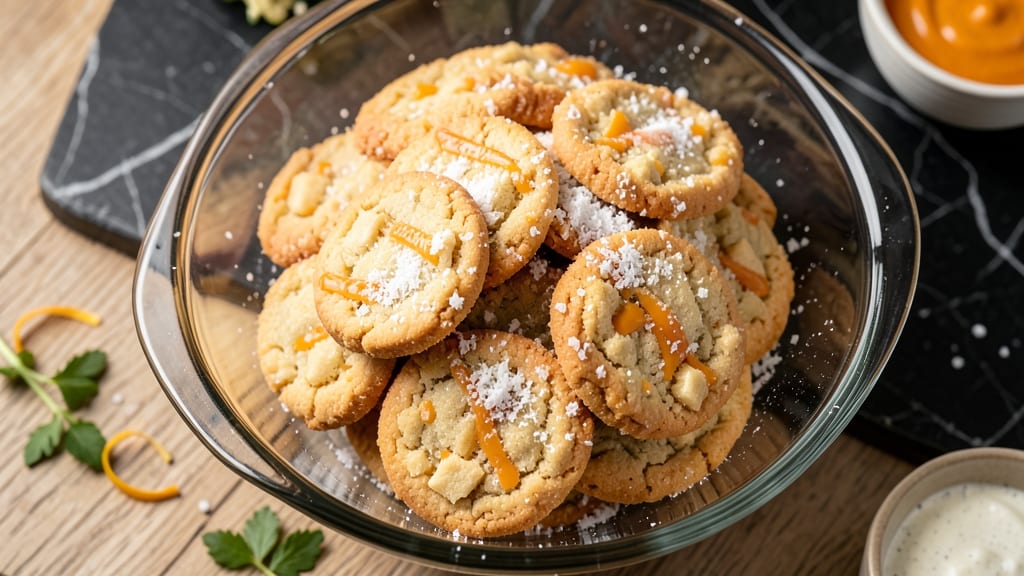
This cheddar shortbread cookie recipe transforms a classic favorite into a savory-sweet masterpiece with sharp cheddar crumbles and buttery richness. The secret lies in the perfect balance of aged cheese and cold butter, creating cookies that crumble between your fingers while delivering bold, cheesy flavor in every bite.
I've perfected this recipe through years of baking, ensuring each cookie maintains that signature tender-yet-crumbly texture that makes it irresistible.
The magic happens with a few key techniques: chilling the dough thoroughly for easier handling, baking at a precise 325°F to prevent spreading, and using a mix of sharp cheddar and cream cheese for depth.
Unlike traditional shortbread, these cookies develop a subtle caramelized edge that adds another layer of complexity. The result is a cookie that's equally at home with a cup of coffee or as a sophisticated appetizer with a glass of wine.
What sets these apart is the way the cheddar transforms the texture—adding pockets of sharp, salty crunch that contrast beautifully with the buttery crumb. The dough comes together in just 10 minutes, but the chilling time ensures perfect texture.
Each batch yields about 24 cookies, perfect for sharing or saving for later (though they rarely last that long).
For extra flavor, try adding a pinch of smoked paprika or fresh rosemary to the dough. The possibilities for variations are endless, but the foundation remains the same: rich cheddar, cold butter, and a touch of technique. Let's get baking!
Ingredients for cheddar shortbread cookie
Nine ingredients. One chilling step. Cookies that crumble with cheesy magic.
| Ingredient | Amount | Notes |
|---|---|---|
| Unsalted Butter, Cold 🧈 | 1 cup | Cut into small cubes, chilled |
| Sharp Cheddar Cheese 🧀 | 1 cup | Freshly grated, aged 12+ months |
| Cream Cheese 🧀 | 4 oz | Room temperature, full-fat |
| Granulated Sugar 🍚 | ¼ cup | Superfine preferred for smooth texture |
| All-Purpose Flour 🌾 | 2 cups | Sifted, no substitutes |
| Kosher Salt 🧂 | ½ tsp | Diamond Crystal preferred |
| Ground Black Pepper 🌶️ | ¼ tsp | Freshly ground for warmth |
| Smoked Paprika 🌶️ | ¼ tsp | Optional, for depth (omit if sensitive) |
| Fresh Rosemary 🌿 | 1 tsp | Finely chopped, optional herb |
The cheddar is non-negotiable here—sharp, aged varieties like Cabot or Tillamook make all the difference. Grab a block from the deli counter and grate it yourself (pre-grated gets clumpy). The butter? Cold cubes are essential for that tender crumb. I always use European-style butter like Plugrá or Kerrygold for extra richness. If you can't find smoked paprika, a pinch of cayenne works in a pinch (literally). For rosemary, Trader Joe's has the best dried version if you don't want to use fresh.
No sharp cheddar? Pepper Jack at half the amount adds heat, but loses that classic cheddar depth. Running low on butter? Coconut oil works in a bind (though texture won't be identical). The flour must be sifted—no lumps, or your cookies will be dense. For the sugar, superfine dissolves better, but regular granulated works if pulsed in a food processor. The cream cheese? Full-fat only—low-fat ruins the texture. And yes, you can skip the smoked paprika and rosemary, but why would you?
This dough must chill for 2+ hours—no shortcuts. Store wrapped in parchment in the fridge for up to 5 days or freeze the dough balls for 3 months. Once baked, keep in an airtight container with parchment between layers. They're best at room temp but reheat beautifully in a 200°F oven for 5 minutes. Trust me, the leftovers are just as good as the first batch—if they last that long.
Why You'll Love This Recipe
- Five-Ingredient Magic: I swear by this combo—cold butter, sharp cheddar, and cream cheese cut into flour like butter. No mixer, no fuss, just a fork and a bowl. The dough comes together faster than I can say "cookie time."
- Rich Without Effort: That sharp cheddar isn’t just flavor—it’s the star. The cream cheese keeps it tender while the sugar caramelizes just enough for a subtle crunch. Honestly, it tastes like a hug from a bakery, but with half the work.
- Party in a Jar: These freeze like champs, so I portion the dough into jars and stash them for last-minute gatherings. No one suspects how little effort went into the "fancy" snack tray—especially when they’re gone in minutes.
- Budget-Friendly Luxury: Sharp cheddar and butter might sound fancy, but a block of each lasts ages. I make a double batch, freeze half, and still save money compared to store-bought cookies. Plus, the leftovers? Even my picky teenager begs for them.
Step-by-step instructions for sharp cheddar shortbread cookies
Here's how to create melt-in-your-mouth shortbread with bold cheddar flavor and perfect crumb.
Mix the Cheese and Butter Base
In a large mixing bowl, combine the 1 cup unsalted butter, cold (cut into small cubes) and the 1 cup sharp cheddar cheese. Use a fork to break down the butter until it resembles coarse crumbs. This cold butter creates those signature flaky layers we love in shortbread.
Add the 4 oz cream cheese (room temperature) and mix until fully incorporated. The cream cheese adds moisture and richness that balances the sharp cheddar. I like to use my hands at this point to work the mixture until it's completely smooth and homogeneous. This ensures even distribution of all our cheesy goodness.
Add Sugar and Dry Ingredients
In a separate bowl, whisk together the 2 cups all-purpose flour, 0.5 tsp kosher salt, 0.25 tsp ground black pepper, 0.25 tsp smoked paprika, and 1 tsp finely chopped fresh rosemary. The rosemary adds a lovely herbal note that pairs beautifully with the sharp cheddar.
Gradually add the dry ingredients to the butter-cheese mixture, mixing gently with a wooden spoon or your hands. You're looking for a texture that's slightly crumbly but holds together when pressed. Add the 0.25 cup granulated sugar and mix until evenly distributed. The sugar will help create that perfect balance of sweetness to cut through the sharpness of the cheddar.
Form and Chill the Dough
Turn the dough out onto a lightly floured surface and gently knead just until it comes together. Don't overwork it—we want to preserve those delicate butter layers. Shape the dough into a rectangle about 1-inch thick and wrap tightly in plastic wrap. Chill in the refrigerator for at least 1 hour or up to 24 hours.
This chilling step is crucial. It firms up the dough so it holds its shape when cutting and prevents excessive spreading in the oven. I usually chill overnight for maximum flavor development and easier handling. The longer it chills, the more pronounced the cheddar flavor becomes.
Cut and Bake to Golden Perfection
Preheat your oven to 350°F. Remove the chilled dough from the refrigerator and cut into desired shapes using a cookie cutter or knife. For classic shortbread, I like to cut into 2-inch squares or rectangles. Place the cut cookies on a parchment-lined baking sheet, spacing them about 1 inch apart to allow for spreading.
Bake for 12-15 minutes until the edges are light golden brown and the centers just begin to set. The centers should still look slightly underdone—they'll firm up as they cool. Don't overbake, or you'll lose that tender crumb we're after. Let the cookies cool on the baking sheet for 5 minutes before transferring to a wire rack to cool completely.
Pro Tips For Making Cheddar Shortbread Cookie
- Chill the Dough Properly: I learned this the hard way—skipping the 30-minute fridge rest makes the dough too soft, and those cookies spread like pancakes. Wrap it tightly in plastic and let it firm up completely before cutting, or your edges will blur into sad, uneven shapes.
- Grate the Cheddar Fine: Sharp cheddar has texture, and if you don’t pulse it in the food processor for 30 seconds, you’ll get gummy pockets instead of smooth, melty flavor. Aim for a consistency like coarse sand—no chunks, no clumps, just even distribution.
- Press the Butter Right: Don’t just mix the butter in like you’re making regular shortbread—press it into the flour mixture with your fingers until it’s fully incorporated. This ensures even moisture and prevents dry, crumbly cookies. (Yes, it feels like overworking, but trust me.)
- Use a Mixer, Not Hands: Forget folding by hand—this dough is stubborn. Pulse it in a food processor for 10-15 seconds after adding the wet ingredients, then dump it onto a surface and press it together once. Less effort, fewer lumps, and no wrist fatigue.
Common mistakes when making perfect results
Skipping the Chill
This is the #1 mistake I see new bakers make—rushing the 2+ hour chill because they're eager to bake. The dough needs this time to firm up so it holds its shape when cutting. Without chilling, your cookies will spread into flat, sad discs.
I've learned the hard way: never skip this step, even if you're in a hurry. If you forget, pop the dough back in the fridge for at least 30 minutes before cutting. 🧊
Overworking the Dough
Once you've mixed everything, resist the urge to knead like you're making bread dough. Shortbread relies on cold butter creating delicate layers, and overworking develops gluten that makes cookies tough. Work the dough just until it comes together—about 10-15 seconds with your hands.
I've ruined batches by turning them into dough "putty" trying to make them perfect. Less is more here! 💪
Using Warm Butter
Cold butter is non-negotiable for that signature shortbread crumb. If your butter is even slightly soft, the cookies will spread excessively and lose their tender texture. To test: press a cube of butter with your finger—if it leaves an indentation, it's too warm.
Pop it in the freezer for 10 minutes to firm up. I keep my butter in the fridge year-round to prevent this exact problem. 🧈
Incorrect Baking Temperature
Baking at 350°F is crucial—any hotter and your cookies will brown too quickly before cooking through, while lower temps risk gummy centers. I've seen people bake these at 375°F thinking they'll get faster results, but they end up with crispy edges and raw centers.
Use an oven thermometer to verify your oven's accuracy—many run 25°F hotter than set. 🌡️
Overbaking for Color
Those golden edges look tempting, but overbaking turns shortbread dry and crumbly. The cookies should be just setting in the center when you remove them—about 12-15 minutes. They'll continue cooking on the baking sheet.
I've had to pull batches out at 10 minutes because my oven runs hot, and the results were perfect. Let them cool completely before tasting—they'll firm up beautifully. 🍪
Not Preheating the Oven
Skipping preheating is a surefire way to uneven baking. Your oven needs 10-15 minutes to reach the proper temperature before adding cookies. I've had batches where one side baked perfectly while others stayed pale because I rushed this step.
Place your baking sheet on the middle rack for even heat distribution—this prevents the bottoms from browning too quickly. ⏰
Nutrition facts
Frequently asked questions
Can I make these cookies without cream cheese?
Yes, but the texture will be slightly different. Replace the 4 oz cream cheese with an extra 2 tablespoons of cold butter and 1 tablespoon of milk or heavy cream to maintain moisture. The cookies will still be delicious but may lack the ultra-tender crumb. For best results, use full-fat Greek yogurt as a substitute—it adds richness and helps bind the dough.
How do I store cheddar shortbread cookies?
Keep them fresh by storing in an airtight container with parchment paper between layers. They'll stay good at room temperature for 3-4 days. For longer storage, freeze the baked cookies (not the dough) for up to 3 months. Reheat in a 200°F oven for 3-5 minutes to restore that fresh-baked crunch. The cheddar flavor actually improves slightly after a day or two!
Why do my cheddar shortbread cookies taste bland?
Bland flavor usually means the cheddar wasn't sharp enough or wasn't aged properly. Use 12+ month aged cheddar for maximum flavor. Also, make sure you're using sharp cheddar (not mild) and that your butter isn't masking the cheese. Try adding 1/4 tsp of garlic powder or 1/2 tsp of lemon zest to brighten the flavor. The smoked paprika and rosemary also enhance the cheddar's sharpness.
Can I make these cookies gluten-free?
Yes, but with some adjustments. Replace the 2 cups all-purpose flour with a 1:1 gluten-free flour blend (like Bob's Red Mill) plus 1/4 cup cornstarch for better texture. You may also need to add 1/2 tsp xanthan gum if your blend doesn't contain it. Chill the dough for 30 extra minutes as gluten-free dough spreads more. Expect a slightly denser texture, but the cheddar flavor will still shine!
What's the best way to serve these cookies?
These cheddar shortbreads are incredibly versatile! Serve them warm with a cup of black tea or chai for a sophisticated afternoon treat. They also make a fantastic appetizer with sharp cheddar-infused whiskey or dry sparkling wine. For a sweet-savory combo, pair with honey or fig jam. The crumbly texture makes them perfect for dipping—try them with chocolate-dipped pretzels for a fun snack mix!