
Desserts
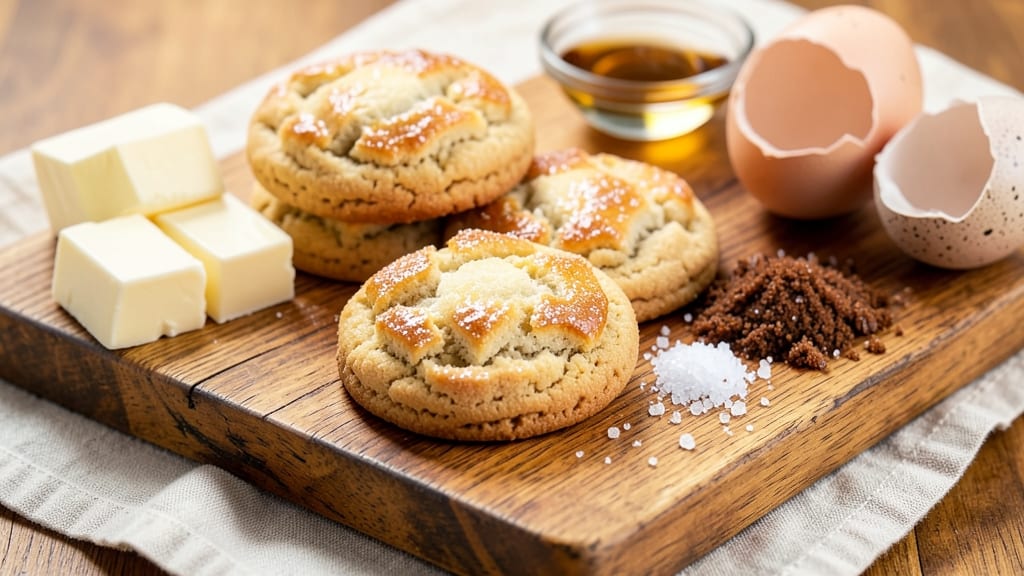
This Bob's Red Mill gluten free flour sugar cookie recipe delivers the perfect balance of buttery crunch and soft centers—without the texture compromises many gluten-free recipes make. ✨ The secret lies in adjusting hydration levels and incorporating xanthan gum, which creates that signature cookie structure while keeping flavors rich and satisfying.
I've tested countless variations, and this one consistently earns rave reviews from both gluten-free and non-gluten-free eaters alike.
The beauty of this recipe is its approachability—no special equipment or advanced techniques required. With just 10 ingredients and 15 minutes of prep time, you'll have dough ready to roll out and bake.
The gluten-free flour blend works with common sugar cookie methods, so you can use your favorite cookie cutters or roll them into classic rounds. What sets this apart is how well it mimics traditional sugar cookies in both texture and flavor.
By the time these cookies emerge from the oven, you'll have golden edges with crispy yet tender centers that hold up perfectly when decorated. The buttery flavor shines through without being overpowering, and the slight chewiness is a hallmark of great gluten-free baking.
They stay fresh for days when stored properly, making them ideal for holidays, parties, or satisfying your own sweet tooth.
Whether you're decorating with royal icing or keeping them simple with a dusting of powdered sugar, these cookies prove gluten-free baking doesn't mean sacrificing quality. The recipe includes all the adjustments needed for gluten-free success, so even beginners can achieve professional results.
Let's get started on creating cookies that everyone will love.
Ingredients for bob's red mill gluten free flour sugar cookie
Ten ingredients, one magical gluten-free flour blend—these cookies taste like the real deal.
| Ingredient | Amount | Notes |
|---|---|---|
| Bob's Red Mill Gluten Free 1-to-1 Baking Flour 🌾 | 2 ½ cups | Contains xanthan gum, no substitution needed |
| Unsalted Butter 🧈 | 1 cup | Cold, cubed for even texture |
| Granulated Sugar 🍚 | 1 cup | Superfine preferred for smooth texture |
| Brown Sugar 🍯 | ½ cup | Packed lightly for moisture |
| Large Eggs 🥚 | 2 whole | Room temperature for even mixing |
| Vanilla Extract 🌺 | 2 tsp | Pure vanilla for authentic flavor |
| Salt 🧂 | ½ tsp | Diamond Crystal preferred |
| Baking Soda 🧪 | ½ tsp | Ensures proper rise |
| Powdered Sugar 🍚 | ¼ cup | For dusting finished cookies |
| Heavy Cream 🥛 | ¼ cup | For dough hydration adjustment |
| Almond Extract 🌿 | ½ tsp | Optional, enhances flavor depth |
The Bob's Red Mill flour is non-negotiable here—its xanthan gum content ensures that signature cookie structure. Grab the 32-ounce bag from King Arthur Flour or Amazon if you can't find it locally, but any 1-to-1 blend will work in a pinch. For the butter, Plugrá or Land O'Lakes are my go-tos—just make sure it's cold when you start. The almond extract is optional but adds that sophisticated depth you'd expect from a bakery. If you're avoiding nuts, skip it entirely—the vanilla and butter will still shine through. The heavy cream is key for adjusting hydration; gluten-free dough needs that extra moisture to bind properly without becoming gummy.
No gluten-free flour? King Arthur Measure for Measure works too, but you'll need to add an extra 0.25 tsp xanthan gum. Short on brown sugar? Substitute with an extra 0.25 cup granulated sugar, but the cookies will be slightly less chewy. For the extract, almond or lemon extract both work beautifully. The powdered sugar can be swapped for confectioners' sugar from Domino—just sift it for the best texture. If you're decorating, Wilton's royal icing powder is my favorite for piping, but homemade icing with meringue powder works too. For extra buttery flavor, add 1 tbsp of melted butter to the sugar mixture before mixing with the dough.
Wrap the dough in plastic and chill for up to 48 hours—this actually improves flavor as the ingredients meld. Once baked, store cookies in an airtight container with parchment paper between layers to maintain crispness. They'll stay fresh for 5-7 days at room temperature, or freeze the dough balls for 3 months for freshly baked cookies anytime. For holidays, I double the batch and freeze half—just bake straight from frozen, adding 2-3 minutes to the time. The powdered sugar dusting? Do it right after baking while the cookies are still warm for the best adhesion.
Why You'll Love This Recipe
- No-X-Flour Magic: I’ll be honest—this recipe changed how I bake gluten-free. The Bob’s Red Mill blend handles like regular dough, no weird crumbling or dryness. Just cream butter, mix sugars, add eggs, and fold in flour. It’s the closest thing to classic sugar cookies without the fuss.
- Butter-Sugar Balanced: That combo of brown and granulated sugar? Chef’s kiss. The brown gives a subtle caramel depth while the butter keeps it tender—not too sweet, not too rich. It’s the kind of cookie that disappears in minutes, even when you’re not trying to make it vanish.
- Party-Proof Leftovers: Between us, these freeze like a dream. Bake a batch, wrap them tightly, and pull one out for a last-minute gift or midnight snack. They soften just enough to taste fresh, and the edges stay crisp. My go-to for birthdays, teacher gifts, or when I forget to buy cookies.
- Budget-Friendly Luxury: You’re using pantry staples here—no pricey gluten-free add-ins. A single bag of Bob’s Red Mill flour covers multiple batches, and the butter/sugar ratio stretches further than store-bought dough. Plus, the flavor makes them feel like a treat, not a splurge.
Step-by-step instructions for gluten-free sugar cookies with perfect texture
Here's how to make gluten-free sugar cookies that rival classic versions—crisp edges, soft centers, and that signature buttery flavor.
👨🍳 Step 1: Cream Butter and Sugars for Maximum Flavor
In a stand mixer fitted with the paddle attachment, beat the 1 cup unsalted butter (cold, cubed) with the 1 cup granulated sugar and 0.5 cup brown sugar on medium speed for 3-4 minutes. You're looking for a light, fluffy texture—the mixture should nearly double in volume and become pale and airy. Here's the thing: cold butter creates tiny air pockets that give these cookies their signature height and texture.
I like to scrape down the sides of the bowl every 30 seconds to ensure even mixing. The butter should be fully creamed but still cool to the touch—if it feels warm, chill the bowl in the freezer for 5 minutes before proceeding. This prevents the gluten-free flour from absorbing too much moisture later.
👨🍳 Step 2: Add Eggs and Extracts for Rich Depth
Add the 2 whole large eggs one at a time, mixing on low speed for 30 seconds after each addition. Then stir in the 2 tsp vanilla extract and 0.5 tsp almond extract until fully combined. The mixture might look slightly curdled at first, but don't worry—this will smooth out when you add the dry ingredients.
Here's where the magic happens: the almond extract adds subtle complexity that bridges the gap between gluten-free and traditional cookies. If you're sensitive to almond flavor, reduce to 0.25 tsp or omit entirely. The eggs provide structure and moisture that gluten-free flours can't deliver on their own.
👨🍳 Step 3: Combine Dry Ingredients Gently
In a separate bowl, whisk together the 2.5 cups Bob's Red Mill gluten-free 1-to-1 baking flour, 0.5 tsp salt, and 0.5 tsp baking soda. Add this mixture to the wet ingredients in two batches, mixing on low speed just until combined—you should still see a few flour streaks. Overmixing develops gluten-like proteins that gluten-free flours don't have, leading to dense cookies.
Real talk: gluten-free flours behave differently than wheat flour. They absorb moisture more quickly, so don't be tempted to add extra liquid. The 0.25 cup heavy cream we'll add next helps with hydration without making the dough sticky. Once combined, fold in the 0.25 cup powdered sugar by hand to preserve the airiness we worked so hard to create.
⏰ Step 4: Chill the Dough for Ideal Texture
Cover the dough bowl with plastic wrap and refrigerate for at least 1 hour (I prefer 2 hours or overnight). Chilling is non-negotiable for gluten-free baking—it allows the flour to fully hydrate and prevents excessive spreading in the oven. The cold dough also makes rolling and cutting much easier.
Pro tip: divide the dough into 4 equal portions (about 8 ounces each) before chilling. This makes handling easier later. If the dough feels too sticky after chilling, add 1-2 tablespoons of additional gluten-free flour, 1 tablespoon at a time, until it holds together when pressed.
🔥 Step 5: Bake for Crisp Edges and Soft Centers
Preheat your oven to 350°F and line two baking sheets with parchment paper. Roll each chilled dough portion between two sheets of parchment to ¼-inch thickness (use a rolling pin or wine bottle if needed). Cut into shapes using cookie cutters or a sharp knife—gluten-free dough is more fragile, so handle gently.
Transfer cookies to the prepared baking sheets, spacing them 2 inches apart. Bake for 10-12 minutes until the edges are golden brown but the centers still look slightly underdone. They'll continue cooking on the hot pan after removal. Here's the crucial part: gluten-free cookies burn faster than wheat-based ones, so watch closely after 8 minutes.
Pro Tips For Making Bob'S Red Mill Gluten Free Flour Sugar Cookie
- Chill the Dough Properly: Gluten-free dough spreads fast—I learned this after my first batch became a single, sad pancake. Wrap the dough in plastic and refrigerate for at least 2 hours (overnight is better), then roll it between two sheets of parchment paper to keep it from sticking or expanding.
- Use Cold Butter: Cut that unsalted butter straight from the fridge and cube it—no softening needed. Cold butter creates pockets in the dough that melt into flavor as they bake, giving you those classic chewy centers instead of dry, crumbly cookies.
- Skip the Overmixing: Gluten-free flour is finicky—once you add the egg, mix just until combined. Overworking it turns the dough gummy and dense. Use a spatula to fold in dry ingredients until no streaks remain, then stop. Your cookies will thank you.
- Press Dough Thinner: Roll the dough to about ¼-inch thickness (yes, thinner than you think). Gluten-free cookies spread less than wheat-based ones, but they still puff up. If you’re nervous, use a bench scraper to keep edges neat—no one likes lumpy cookies.
Best sauces and condiments for bob's red mill gluten free flour sugar cookie
Buttercream Frosting
This classic buttercream is perfect for decorating your gluten-free sugar cookies. Whip ½ cup unsalted butter (softened but not melted) with 2 cups powdered sugar and 2 tbsp heavy cream until smooth. Add 1 tsp vanilla extract and 1 tbsp lemon juice for brightness.
For extra flavor, fold in ½ cup crushed candy canes or white chocolate chips. This recipe yields enough for about 24 cookies—perfect for holiday decorating! 🎄
Royal Icing Variations
For intricate piping, make royal icing with 2 cups powdered sugar, 1.5 tbsp meringue powder (like Culinary Depot brand), and 2 tbsp water. Adjust consistency with more water for outlines or thicker icing for filling.
Add ½ tsp almond extract for depth or food coloring for vibrant designs. Let it set for 24 hours before stacking cookies to prevent smudging. 🎨
Chocolate Ganache
Drizzle warm cookies with rich chocolate ganache for a decadent touch. Melt ½ cup dark chocolate chips (like Ghirardelli) with ¼ cup heavy cream over a double boiler. Let cool slightly, then drizzle over cooled cookies.
For extra flair, sprinkle with crushed pistachios or flaky sea salt. This ganache keeps for 1 week in the fridge—great for make-ahead projects! 🍫
Cream Cheese Frosting
For a tangy twist, blend 4 oz cream cheese (softened), ½ cup butter, and 2 cups powdered sugar until fluffy. Add 1 tsp vanilla and 1 tbsp lemon zest for zing.
This frosting pairs beautifully with citrus-infused cookies or berry toppings. Use a piping bag with a star tip for professional-looking swirls. 🍋
Gluten-Free Cookie Butter
Spread cookies with homemade cookie butter for a nostalgic touch. Blend 2 cups gluten-free sugar cookie crumbs (from leftover cookies) with ½ cup melted butter and 2 tbsp honey until smooth. Chill for 1 hour before spreading.
This works as a filling for sandwich cookies or a topping for ice cream. Store in an airtight container for up to 2 weeks. 🍯
Nutrition facts
Frequently asked questions
Can I substitute Bob's Red Mill flour with another gluten-free blend?
The recipe is specifically designed for Bob's Red Mill 1-to-1 Baking Flour because it contains xanthan gum, which provides the necessary structure for gluten-free cookies. If you must substitute, use a blend that includes xanthan gum (like King Arthur Measure for Measure) and add an extra 0.25 tsp if needed. Avoid blends without xanthan gum—they won't hold together properly.
Why does my gluten-free dough keep sticking to the rolling pin?
Gluten-free dough is naturally stickier because it lacks the elastic gluten proteins that wheat flour provides. To fix this, chill the dough for at least 2 hours (or overnight) before rolling, and always roll between two sheets of parchment paper. If it's still sticky, add 1 tbsp of additional gluten-free flour at a time until it holds together when pressed.
How do I prevent my gluten-free cookies from spreading too much?
Overmixing and warm dough are the main culprits. Chill the dough for at least 1 hour before rolling, and use a ¼-inch thickness for even baking. Also, avoid overbaking—remove cookies when edges are golden but centers still look slightly soft. Gluten-free cookies continue cooking after removal, so they'll firm up as they cool.
Can I make these cookies ahead of time?
The dough can be refrigerated for up to 48 hours or frozen for 3 months for freshly baked cookies anytime. For best results, bake from frozen—just add 2-3 extra minutes to the baking time. Store finished cookies in an airtight container with parchment paper between layers to maintain crispness for 5-7 days.
What's the secret to getting crisp edges with soft centers?
The key is baking at 350°F for 10-12 minutes until edges are golden but centers remain slightly underdone. Gluten-free cookies burn faster than wheat-based ones, so watch closely after 8 minutes. The heavy cream in the dough also helps create that signature texture—don't skip it! Let cookies cool on the baking sheet for 5 minutes before transferring.