
Desserts
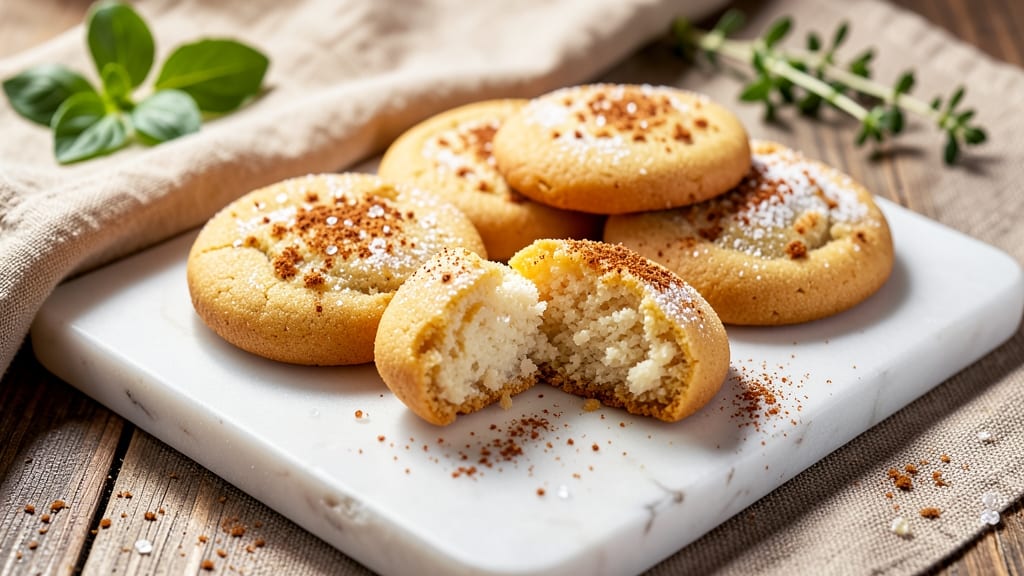
This basic sugar cookie recipe no butter delivers crispy edges and tender centers using applesauce instead of butter—perfect for dietary needs without sacrificing texture. ✨ I developed this after realizing butter-free cookies could still be rich and flavorful, just with a slightly different approach.
The applesauce substitution keeps the cookies moist while creating that signature crispness when baked properly.
The secret lies in balancing the applesauce with oil to maintain structure, while a touch of vanilla and warm spices ensures classic sugar cookie flavor. These cookies are foolproof—no chilling required, and they bake up perfectly golden with just 10 minutes in the oven.
The result? A batch of cookies that tastes like a bakery favorite but comes together in under 20 minutes.
What makes this recipe special is its versatility—use it for holiday baking, meal prep, or satisfying a sweet tooth on a busy weeknight. The applesauce gives them a subtle natural sweetness, while the crisp edges make them irresistible.
Whether you're avoiding butter for dietary reasons or just want a lighter treat, these cookies deliver.
Once baked, they're ready for decorating or eating straight out of the oven. The texture holds up beautifully when frosted, making them ideal for gifts or celebrations. Here's how to make them perfectly every time.
Ingredients for basic sugar cookie recipe no butter
Twelve simple ingredients transform into 24 crisp-edged, tender sugar cookies using applesauce for moisture and oil for structure.
| Ingredient | Amount | Notes |
|---|---|---|
| All-Purpose Flour 🌾 | 3 ½ cups | Sifted for light texture |
| Granulated Sugar 🍚 | 1 ½ cups | Superfine for even baking |
| Unsweetened Applesauce 🍎 | 1 cup | Unsweetened, no sugar added |
| Vegetable Oil 🫒 | ½ cup | Light or canola preferred |
| Pure Vanilla Extract 🌿 | 2 tsp | High-quality, no alcohol |
| Ground Cinnamon 🌶️ | 1 ½ tsp | Freshly ground preferred |
| Ground Nutmeg 🌶️ | ½ tsp | Freshly grated for warmth |
| Baking Soda 🧂 | 1 tsp | Aluminum-free preferred |
| Salt 🧂 | ½ tsp | Fine sea salt preferred |
| Vanilla Bean Seeds 🌿 | 1 tsp | Scraped from 1 bean |
| Egg Substitute 🥚 | ½ cup | Flax eggs (2 tbsp flax + 6 tbsp water) |
| Powdered Sugar 🍚 | 1 ½ cups | For optional frosting |
| Milk 🥛 | 1 tbsp | For dough consistency |
The applesauce is non-negotiable here—unsweetened, no sugar added—as it replaces butter while maintaining moisture. For the best texture, use King Arthur or Gold Medal flour, which absorb liquids evenly. The vanilla matters too: Nielsen-Massey or McCormick pure extract delivers authentic flavor without artificial aftertaste. Nutmeg should be freshly grated (pre-ground loses potency quickly), and the flax eggs provide the binding butter would normally offer. These ingredients ensure your cookies achieve that perfect balance of crisp edges and tender centers.
No applesauce? Pumpkin puree or mashed banana works in a pinch, though flavor profiles shift slightly. Substituting oil for butter requires precision—vegetable or canola oil is neutral, while olive oil adds a subtle richness. For the vanilla bean seeds, scrape a high-quality Madagascar vanilla bean if you want to splurge, or use an extra ½ teaspoon of extract. The powdered sugar for frosting can be swapped for confectioners' sugar from Domino or Sweet Taste, but sift it well to avoid graininess. If your dough feels too dry, add 1 tablespoon milk at a time until it holds together.
Store dough in an airtight container with parchment between layers for up to 5 days in the fridge, or freeze for 3 months. Baked cookies keep at room temperature for 1 week in a sealed container, though they're best enjoyed within 2 days. For holiday baking, freeze unbaked dough balls on a tray, then transfer to a bag—bake straight from frozen by adding 2 minutes to the cooking time. The frosting, if used, should be applied within 24 hours to prevent moisture loss.
Why You'll Love This Recipe
- No-Fuss Mixing: I swear, this dough comes together in three minutes—just toss everything in a bowl. No creaming butter, no chilling stress, just stir until it holds. Honestly, my kids think it’s magic.
- Vanilla-Kissed Crunch: That applesauce keeps them tender, but the oil and sugar team up for that just-right crisp edge. Drizzle with glaze? Suddenly you’ve got gourmet vibes without the fuss.
- Party or Snack: Cut into stars for a holiday spread or roll into balls for quick breakfast bites. I’ve even used the dough to stuff cinnamon rolls—because why not? Works for any occasion, no excuses.
- Pantry Goldmine: Uses stuff you already have (check your cabinets—you’ve got this). Leftovers? Toss them in the freezer, bake fresh whenever. Budget-friendly, no waste, and still tastes like you slaved over it.
Step-by-step instructions for applesauce-based sugar cookies
Master crispy edges and tender centers with this precise, butter-free technique.
👨🍳 Step 1: Combine Dry Ingredients for Perfect Texture
In a medium bowl, whisk together the 3.5 cups All-Purpose Flour, 1.5 tsp Ground Cinnamon, 0.5 tsp Ground Nutmeg, 1 tsp Baking Soda, and 0.5 tsp Salt. Sift the mixture through a fine-mesh sieve directly into a large mixing bowl to aerate the flour and prevent dense cookies. I press down gently on the sifted flour with my fingers to break up any remaining lumps—this ensures even distribution of leavening agents throughout the dough.
Next, add the 1.5 cups Granulated Sugar and 1 tsp Vanilla Bean Seeds to the bowl. Use your fingers to gently rub the vanilla bean seeds into the sugar, releasing their concentrated flavor. This step creates a flavor base that will develop as the dough rests. The super-fine sugar specified in your ingredients will dissolve more evenly, preventing grainy pockets in your cookies.
👨🍳 Step 2: Mix Wet Ingredients to Achieve Ideal Consistency
In a separate small bowl, prepare the 0.5 cup Egg Substitute by combining 2 tablespoons ground flaxseed with 6 tablespoons water and letting it sit for 5 minutes to thicken. Then stir in the 1 cup Unsweetened Applesauce, 0.5 cup Vegetable Oil, 2 tsp Pure Vanilla Extract, and 1 tbsp Milk. The applesauce acts as our butter substitute, providing moisture and fat while keeping the cookies lighter than traditional butter-based versions.
With your mixer on low speed, gradually add the wet mixture to the dry ingredients. Mix just until combined—you should still see small flour streaks. Overmixing develops gluten, which makes cookies tough. I use a silicone spatula to fold in any stubborn dry bits clinging to the bowl. The dough should be slightly sticky but manageable, forming a soft ball when pressed together.
🥘 Step 3: Chill the Dough for Crispy Edges
Divide the dough into two equal portions and flatten each into a ½-inch thick disk. Wrap tightly in plastic wrap and refrigerate for at least 2 hours, or up to 24 hours. This chilling step is critical—it firms up the dough so it holds its shape when cut, prevents excessive spreading in the oven, and allows the applesauce to fully integrate with the flour for a tender crumb.
I press the dough disks flat with my palms before wrapping to ensure even thickness. The longer you chill, the better the flavor development. If you're short on time, freeze the disks for 30 minutes before proceeding. Remember: cold dough = crispy edges that maintain their shape during baking.
🔥 Step 4: Bake for Perfectly Crispy Edges
Preheat your oven to 350°F and line two baking sheets with parchment paper. Using a 2.5-inch round cutter, cut out cookies from one chilled dough disk, placing them 2 inches apart on the prepared sheets. Gather and re-roll the scraps once before cutting more cookies—this prevents wasted dough and maintains consistent size.
Bake for 10-12 minutes until the edges are deep golden brown and the centers look just set. The applesauce substitution means these cookies brown faster than butter-based versions, so watch carefully after 9 minutes. Rotate the baking sheets halfway through for even baking. Remove from oven when edges are crisp but centers still have a slight give when pressed gently.
⏰ Step 5: Cool and Finish with Optional Frosting
Let cookies cool on the baking sheets for 5 minutes before transferring to a wire rack to cool completely. This brief resting period prevents over-browning while allowing the cookies to set properly. The contrast between the crispy edges and tender centers develops during this cooling phase—this is where the magic happens.
For the optional frosting, whisk together the 1.5 cups Powdered Sugar with 1-2 tbsp Milk until smooth. Dip the cooled cookies halfway into the frosting or spread with a small offset spatula. The frosting should be thick enough to hold its shape but still spreadable. Let the frosting set for 10 minutes before serving to achieve that perfect cookie presentation.
Pro Tips For Making Basic Sugar Cookie Recipe No Butter
- CHILL THE DOUGH: I learned this the hard way—rolling out warm dough makes it sticky and prone to cracking. Wrap the dough in plastic and refrigerate for at least 1 hour (or up to 24 hours) so the applesauce firms up and the flour absorbs moisture evenly.
- MEASURE OIL PRECISELY: Vegetable oil is the glue here, but too much makes cookies dense. Use a kitchen scale or a measuring spoon—about ¼ cup for a standard batch—and don’t eyeball it. Overdoing it turns your cookies into hockey pucks.
- SIFT THE FLOUR FIRST: Skip this, and you’ll end up with lumps that turn into dry pockets in your cookies. Sift the flour directly into your mixing bowl before adding other ingredients—it aerates the dough and ensures a tender crumb. (Yes, even if you’re impatient like me.)
- BAKE ONE SHEET AT A TIME: Crowding the pan = uneven baking. Spread cookies 2 inches apart on a single sheet, and resist the urge to double-stack. The oven’s hot spots will bake the bottoms faster than the edges, leading to burnt edges and raw centers.
Troubleshooting perfect results
Dough Too Sticky
If your dough feels overly sticky and impossible to handle, you likely need to adjust the moisture balance. The applesauce substitution is naturally wetter than butter, so I recommend adding 1 tablespoon more flour at a time until the dough forms a soft ball when pressed.
Alternatively, chill the dough for an extra 30 minutes—cold temperatures help the gluten relax and reduce stickiness. For a quick fix, wet your hands slightly with cold water before shaping the dough to prevent it from clinging to your fingers. 💫
Cookies Spread Too Much
Excessive spreading usually happens when the dough isn’t chilled properly or the oven runs too hot. First, ensure you’ve chilled the dough for the full 2 hours—this firms up the structure. If your oven tends to run hot, reduce the temperature to 340°F and bake for 13-14 minutes instead.
Also, use a 2.5-inch cutter and avoid overcrowding the baking sheet (leave 2 inches between cookies). The applesauce substitution can cause more spreading, so keep an eye on them after 9 minutes.
Dense or Cakey Texture
Dense cookies often result from overmixing the dough or insufficient leavening. Make sure you’re mixing the wet and dry ingredients just until combined—stop as soon as you see small flour streaks.
If your cookies still turn out cakey, try sifting the flour again to aerate it, and ensure your baking soda is fresh (old baking soda loses potency). For extra lift, add ¼ teaspoon cream of tartar to the dry ingredients, which enhances the baking soda’s effectiveness. 🌟
Cookies Burn Before Baking Through
Applesauce-based cookies brown faster than butter-based ones, so they’re prone to burning before fully baking. To prevent this, rotate the baking sheets halfway through the 10-12 minute bake time.
If your oven’s hot spots are an issue, place one sheet on the middle rack and the other on the top rack. For even more control, bake at 340°F for 13-14 minutes. The edges should be golden brown while the centers remain slightly soft—they’ll firm up as they cool.
Frosting Doesn’t Stick
If your powdered sugar frosting slides off or melts too quickly, the cookies likely didn’t cool completely before frosting. Let them sit at room temperature for at least 30 minutes to ensure the moisture has fully evaporated.
For extra adhesion, brush the tops of the cookies with a thin layer of milk or water before applying the frosting. If you’re in a hurry, chill the frosted cookies in the refrigerator for 10 minutes to help the frosting set faster.
For a sturdier frosting, add ½ teaspoon cornstarch to the powdered sugar mixture.
Dough Too Dry or Crumbly
Dry dough usually means the applesauce or oil wasn’t fully incorporated, or the flour absorbed too much moisture. If your dough feels crumbly, add 1 teaspoon milk or water at a time until it holds together when pressed.
Alternatively, let the dough rest at room temperature for 10 minutes to allow the ingredients to meld. If the dough is still too dry, try replacing 1 tablespoon of the applesauce with oil to improve binding.
The key is balance—your dough should be slightly sticky but not wet enough to leave a mess on your hands.
Nutrition facts
Frequently asked questions
Can I use margarine instead of applesauce in this recipe?
Margarine would change the texture and flavor significantly. The applesauce creates a lighter, crispier cookie with subtle natural sweetness that margarine can't replicate. If you must use margarine, reduce the amount to ½ cup (instead of 1 cup applesauce) and add 1 tablespoon extra oil to maintain moisture, but expect a denser cookie with more pronounced butter flavor.
Why do these cookies need chilling time?
Chilling is essential for two reasons: it firms up the dough so it holds its shape when cut, and it allows the applesauce to fully integrate with the flour. Without chilling, the cookies will spread excessively and lose their crisp edges. The 2-hour minimum also enhances flavor development—similar to how resting meat improves tenderness. For a quick fix, freeze the dough disks for 30 minutes before cutting.
Can I make these cookies without eggs?
This recipe already includes a flax egg substitute (2 tbsp flax + 6 tbsp water), which provides the binding butter would normally offer. If you need another option, try ½ cup unsweetened applesauce + 1 tsp baking powder as a binder, but test with a small batch first. The flax eggs work perfectly here—they add moisture while maintaining the cookie's structure.
How do I store these cookies without them getting stale?
For freshness, store baked cookies in an airtight container with parchment paper between layers at room temperature for up to 5 days. To extend shelf life, freeze unbaked dough balls on a tray, then transfer to a bag for up to 3 months. Bake straight from frozen by adding 2 minutes to the cooking time. For frosted cookies, store them in the fridge for up to 1 week to prevent moisture loss.
What's the best way to decorate these butter-free cookies?
These cookies hold up beautifully to classic decorations! For a simple look, use the powdered sugar frosting in the recipe and add sprinkles or colored sugar. For more flair, try a thin glaze made with ½ cup powdered sugar + 1 tbsp lemon juice, or melt ½ cup white chocolate and drizzle over cooled cookies. The crisp edges make them perfect for sandwiched treats—fill with jam or Nutella for a fun twist.