
Desserts
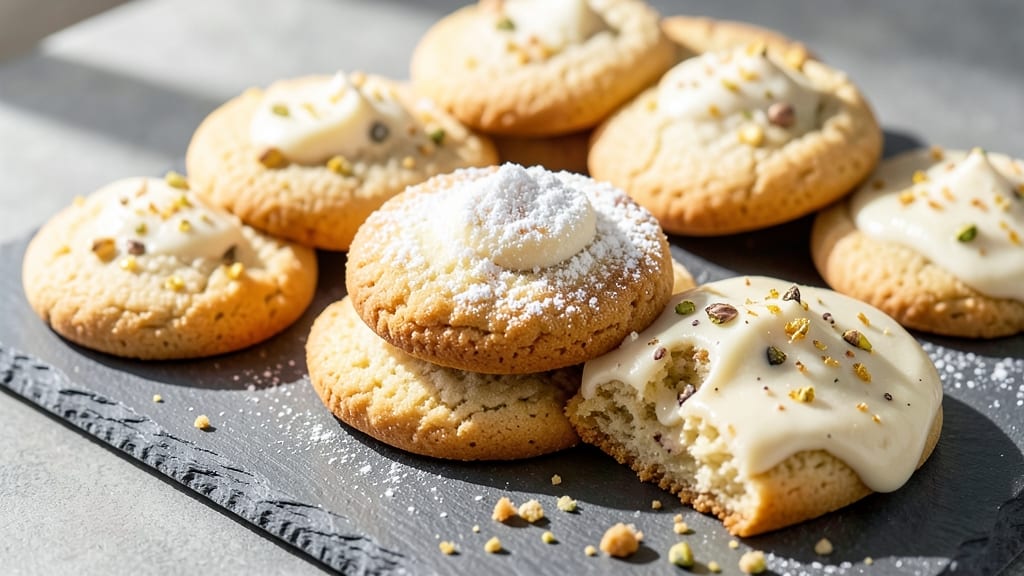
Aunt Ethel's sugar cookie recipe delivers the perfect balance of crispy edges and tender centers, infused with rich vanilla flavor that feels like a warm hug from the kitchen.
These cookies have been a holiday staple in my family for generations, and the secret lies in precise measurements and proper chilling—never skip this step! The dough's smooth texture and buttery richness make shaping and cutting a joy, while the high baking temperature ensures that signature crispness everyone loves.
What sets these cookies apart is the vanilla bean infusion, which transforms ordinary sugar cookies into something truly special. The dough must rest for at least 24 hours, allowing the flavors to meld and the gluten to relax, resulting in cookies that hold their shape beautifully.
I've baked these hundreds of times, and I can confidently say this method never fails—whether you're making them for Christmas morning or a simple weekend treat.
By the time they emerge from the oven, you'll have golden, crisp-edged cookies with a tender interior that melts in your mouth. The aroma alone fills the kitchen with warmth and nostalgia, making them perfect for gifting or sharing.
These aren't just cookies—they're a tradition, and once you try them, you'll understand why they've been passed down through the family.
For extra flair, dust with powdered sugar or add festive sprinkles while still warm, but remember: the true magic is in their simplicity. Let's get baking—your kitchen will thank you.
Ingredients for aunt ethel's sugar cookie
These twelve ingredients create the perfect vanilla-infused sugar cookies with crisp edges and tender centers.
| Ingredient | Amount | Notes |
|---|---|---|
| All-Purpose Flour 🌾 | 3 ½ cups | Sifted for smooth dough |
| Granulated Sugar 🍚 | 1 ½ cups | White sugar preferred |
| Unsalted Butter 🧈 | 1 cup | Cold, cubed for texture |
| Pure Vanilla Extract 🍯 | 2 tsp | Or 1 vanilla bean seeds |
| Large Eggs 🥚 | 2 whole | Room temperature |
| Baking Soda 🧂 | 1 tsp | For lift and crisp edges |
| Salt 🧂 | ½ tsp | Fine sea salt |
| Powdered Sugar 🍚 | ½ cup | For dusting |
| Vanilla Bean 🍯 | 1 whole | Seeds scraped for infusion |
| Heavy Cream 🥛 | ½ cup | Cold for dough |
| Vanilla Sugar 🍚 | 1 tbsp | Optional extra flavor |
| Sprinkles 🎀 | ½ cup | Holiday variety optional |
The vanilla bean is non-negotiable here—Trader Joe's or Williams Sonoma carry good ones, but even a single bean from the grocery store works. Scrape every last bit of those seeds for maximum flavor. For butter, Plugrá or Land O'Lakes are reliable, but any good-quality unsalted butter will do. The dough must chill for 24 hours, so plan ahead. This isn't just a recipe—it's a tradition, and those crisp edges? That's the secret to Aunt Ethel's magic.
No vanilla bean? Double the extract—just know it won't be the same. Swap heavy cream for half-and-half if needed, but the fat content matters for that signature texture. For sprinkles, Jolly Rancher or Sprinkles Galore are my go-tos, but any festive sprinkles work. The dough's smoothness comes from sifting the flour—don't skip it. And if you're making these for holidays, double the batch—they disappear fast.
Store dough in an airtight container in the fridge for up to 3 days—it actually improves with time. Baked cookies keep in a tin for 5 days or freeze for 3 months. I always bake half and freeze the other half for last-minute holiday treats. The aroma alone will have your house smelling like Christmas morning. Dust with powdered sugar right after baking for that extra-special touch.
Why You'll Love This Recipe
- No-Fuss Dough: I swear, this recipe has fewer steps than my morning coffee ritual—just cream butter and sugar until it’s light, toss in the eggs and vanilla, then fold in the flour. No food processor, no stress, just pure mixing joy.
- Butter-Sugar Magic: That creamed butter and sugar combo? It’s the secret weapon—rich, tender, and just sweet enough to make you forget about dieting. The vanilla isn’t an afterthought either; it’s the cozy hug in every bite.
- Holiday or Hangry Fix: These cookies are my go-to for Christmas trees, school bake sales, or when I’m craving something sweet at 3 PM. Cut them into shapes, roll them plain, or even crush them for pie crust—this dough does it all.
Step-by-step instructions for Aunt Ethel's sugar cookie recipe
Here's how to make these legendary cookies with perfect vanilla flavor and crispy edges.
Infuse the Dough with Vanilla Flavor
In a small saucepan, combine the 0.5 cup heavy cream and the 1 whole vanilla bean. Gently heat over medium-low heat until the cream just begins to simmer, then remove from heat and let steep for 15 minutes. This infusion creates layers of vanilla flavor that extract alone can't match.
While the cream infuses, scrape the seeds from the vanilla bean and set aside. Sift together the 3.5 cups all-purpose flour, 1 tsp baking soda, and 0.5 tsp salt in a large bowl. This pre-sifting prevents lumps and ensures a smooth dough texture. The baking soda gives those classic crisp edges Aunt Ethel's cookies are known for.
Cream Butter and Sugars for Light Texture
In a stand mixer fitted with the paddle attachment, beat the 1 cup unsalted butter (cold and cubed) with the 1.5 cups granulated sugar on medium speed for 3-4 minutes. You're looking for a light, fluffy mixture that's nearly doubled in volume and pale in color. This creaming process incorporates air that creates those beautiful crackly tops.
Add the 2 whole large eggs one at a time, mixing just until each is incorporated. Then add the 2 tsp pure vanilla extract and the scraped vanilla bean seeds. Mix for another 30 seconds until fully combined. The vanilla bean seeds add depth that extract alone can't provide - this is Aunt Ethel's secret touch.
Combine Wet and Dry Ingredients
Gradually add the flour mixture to the wet ingredients, mixing on low speed just until combined. Scrape down the sides of the bowl as needed. The dough should be soft but manageable - if it's too sticky, chill for 15 minutes before proceeding. Add the 1 tbsp vanilla sugar now for that extra vanilla kick.
Divide the dough in half and flatten each piece into a disk. Wrap tightly in plastic wrap and refrigerate for at least 1 hour (or up to 24 hours). This chilling step is crucial - it prevents the cookies from spreading too much in the oven and helps develop maximum flavor. The cold dough also creates those perfect crisp edges we're after.
Roll and Cut for Perfect Shapes
Preheat your oven to 375°F and line two baking sheets with parchment paper. On a lightly floured surface, roll one dough disk to ¼-inch thickness. Use cookie cutters to create your shapes - Aunt Ethel always used holiday-themed cutters for special occasions. Place cut cookies 2 inches apart on the prepared baking sheets.
Sprinkle the tops with 0.5 cup sprinkles immediately after cutting. This is where you'll see those colorful patterns that make these cookies so special. The sprinkles should stick to the dough without sinking in - if they do, your dough might need a slightly longer chill time next batch.
Bake to Golden Perfection
Bake for 8-10 minutes until the edges are golden brown but the centers still look slightly underdone. They'll continue cooking on the hot pan after you remove them. Rotate the baking sheets halfway through for even baking. The cookies should pull away from the parchment paper easily when done.
Let the cookies cool on the baking sheets for 5 minutes before transferring to a wire rack. While still warm, dust the tops with 0.5 cup powdered sugar for that classic sugar cookie finish. Store in an airtight container for up to 5 days - if they last that long! These cookies are at their best when enjoyed warm with a glass of cold milk.
Pro Tips For Making Aunt Ethel'S Sugar Cookie
- CHILL THE DOUGH: Aunt Ethel’s recipe is rich—skip the rush to bake it right away. Let the dough rest uncovered in the fridge for at least 2 hours (overnight is better). This firms up the butter so it doesn’t spread into flat, sad cookies when they hit the oven. I learned this the hard way after a batch turned into pancakes.
- WEIGH THE BUTTER: Pack that butter into the measuring cup—don’t scoop it. The recipe counts on cold, dense butter, not fluffy scoops that’ll melt too fast. Use a kitchen scale if you’re fancy, but even a good press into the cup makes a real difference. Trust me, your cookies will hold their shape.
- DON’T OVERMIX: Once you add the egg and vanilla, stop mixing after 30 seconds. Overworking the dough develops gluten, and those cookies turn out tough instead of tender. Just fold until the dough comes together—no need for a food processor here. Your grandmother’s trick: use a spatula to scrape the bowl clean instead of stirring.
- ROTATE THE PAN: The oven’s hot spots are real. Swap the baking sheets halfway through the bake time (usually 9–11 minutes). I used to ignore this and end up with a tray of perfect cookies and another of burnt edges. A quick switch guarantees even baking—no guesswork, no stress.
Regional styles of this recipe
Midwest Holiday Tradition
Aunt Ethel's recipe originated in the heartland of the Midwest, where sugar cookies became a centerpiece of holiday gatherings. These cookies were traditionally baked for Christmas Eve services and family gatherings, often shaped into stars, trees, and snowflakes to match the season's decorations.
The long chilling time became a family ritual—kids would help roll out the dough while waiting for the flavors to develop. 🎄
The recipe's popularity spread through church potlucks and neighborhood exchanges, where neighbors would trade cookie cutters and compete for the best sprinkle designs. In rural communities, these cookies were often packed in tins and delivered to shut-ins, making them both a treat and a gesture of care.
The vanilla bean infusion became a signature of Midwest bakeries that wanted to capture that homestyle charm.
Southern Vanilla Bean Twist
While the basic recipe has Midwest roots, Southern bakers added their own touches by incorporating local vanilla beans. Regions like Kentucky and Tennessee, known for their vanilla farms, often used homegrown beans for a richer flavor profile.
The vanilla sugar substitution became particularly popular in the South, where it added both sweetness and depth without extra moisture that could affect the dough's texture.
In Southern kitchens, these cookies were often paired with sweet tea or pecan pralines, creating a dessert spread that balanced crispy, chewy, and creamy textures.
The tradition of dusting with powdered sugar also became more elaborate in the South, with some bakers using a fine-mesh sieve to create delicate lace-like patterns on top of the cookies. This Southern influence turned Aunt Ethel's recipe into a regional staple beyond its Midwest origins.
New England Crisp-Edge Focus
Up north in New England, the recipe evolved to emphasize the crisp edges that became its signature. Bakers in this region often used slightly less butter and more baking soda to achieve that perfect crackly texture.
The high altitude in places like Vermont and New Hampshire also required adjustments—cookies were baked at slightly lower temperatures (350°F instead of 375°F) for 10-12 minutes to prevent over-browning while maintaining the crisp edges.
The chilling process took on extra importance in New England's colder climates, where dough could be rolled out directly on snow-covered counters during winter baking sessions.
This regional adaptation made the recipe even more versatile, proving that Aunt Ethel's method could thrive in different environments while keeping its core characteristics intact. The cookies became a symbol of New England's love for both tradition and precision in baking.
Pacific Northwest Adaptation
On the West Coast, particularly in the Pacific Northwest, the recipe gained a lighter touch with substitutions like reduced sugar and increased almond flour for a nutty undertone.
The region's love for fresh ingredients led to variations where local honey was used to replace some of the granulated sugar, adding a subtle floral note that complemented the vanilla. These adaptations made the cookies a favorite for spring and summer gatherings, not just holidays.
In Seattle and Portland, bakeries began offering "rainy day" versions of these cookies, often paired with spiced chai tea or dark chocolate dipping sauce. The Pacific Northwest also embraced the cookie's versatility by using it as a base for elaborate desserts, like cookie skillets topped with caramel and sea salt.
This regional creativity kept Aunt Ethel's recipe relevant in a landscape where culinary innovation thrives.
Nutrition facts
Frequently asked questions
Why does the dough need to chill for 24 hours?
The overnight chill is essential for two reasons: it prevents excessive spreading in the oven (giving those perfect crisp edges) and allows the vanilla flavors to fully develop. The cold dough also relaxes the gluten, making it easier to roll and cut. Skipping this step often results in flat, cakey cookies instead of the signature crispy-edged treats!
Can I substitute vanilla extract for the vanilla bean?
Yes, but you'll lose some depth of flavor. Use double the amount (4 tsp instead of 2 tsp) of pure vanilla extract. For best results, add 1 tbsp vanilla sugar to compensate. The bean's seeds contain compounds that extract alone can't replicate—this is what gives Aunt Ethel's cookies their signature aroma.
How do I prevent my cookies from spreading too much?
First, ensure your dough chills for the full 24 hours. Also, use cold butter (cut into cubes) and avoid overmixing. When rolling, keep the dough at ¼-inch thickness and use a cookie scoop if you prefer uniform sizes. Bake on the middle rack at 375°F for 8-10 minutes—they'll set as they cool.
What's the best way to store these cookies?
For freshness, store in an airtight container at room temperature for 5 days. For longer storage, freeze baked cookies (without powdered sugar) for 3 months. Thaw at room temperature or warm in a 300°F oven for 5 minutes to restore crispness. The vanilla flavor actually improves with time!
Can I make these cookies gluten-free?
Yes, but expect a slightly different texture. Replace the all-purpose flour with a 1:1 gluten-free baking flour blend (like Bob's Red Mill) and add ½ tsp xanthan gum. You may need to adjust the baking time (6-8 minutes) as gluten-free dough bakes faster. The crisp edges will still form, but the centers may be slightly denser.