
Desserts
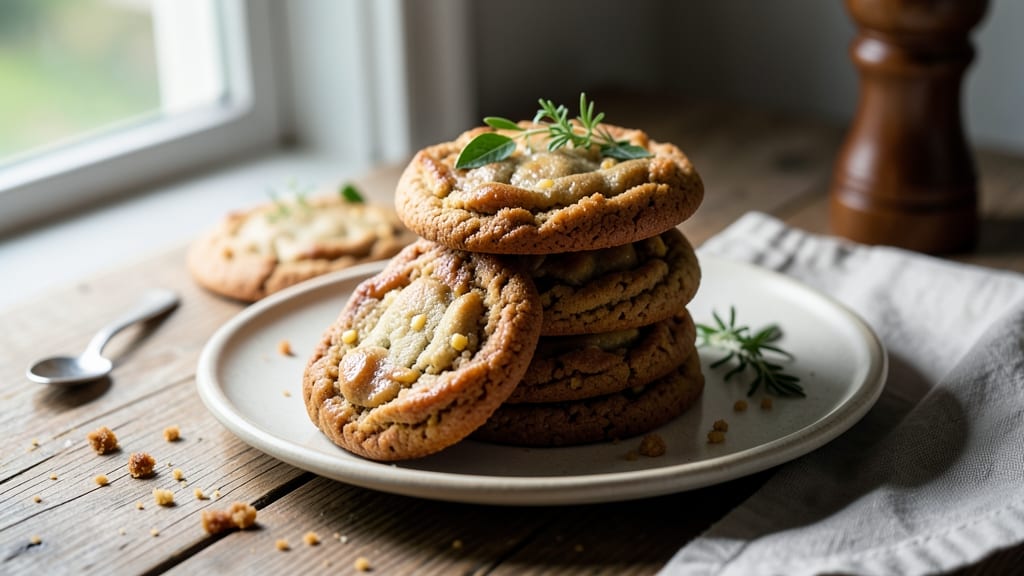
Alton Brown's chewy cookie recipe delivers the perfect balance of crisp edges and tender centers with a touch of browned butter magic. The secret lies in precise technique—browning the butter and folding in sea salt creates a flavor depth that transforms ordinary cookies into something extraordinary.
This isn't just another cookie recipe; it's a lesson in how small details elevate simple ingredients to restaurant-quality results.
The dough comes together with just 8 ingredients, but the magic happens in the baking. Alton's method ensures even heat distribution for consistent texture, and the browned butter adds a nutty richness that keeps these cookies moist for days.
No special equipment needed—just patience and attention to detail, which is what makes this recipe foolproof for home bakers.
What you'll end up with are cookies that are crisp around the edges but still soft in the center, with that signature chewy texture that makes them impossible to resist. The sea salt flakes add a sophisticated finish, while the browned butter flavor lingers with every bite.
These aren't just cookies—they're a testament to how precision baking can create something truly special.
Perfect for holiday baking, gift-giving, or satisfying your afternoon sweet tooth, this recipe scales beautifully and tastes even better the next day. Let's get started on creating cookies that will impress even the most discerning cookie lovers.
Ingredients for alton brown chewy cookie
Eight simple ingredients transform into Alton Brown's legendary chewy cookies with browned butter magic.
| Ingredient | Amount | Notes |
|---|---|---|
| Unsalted Butter 🧈 | 1 cup | Browned for nutty richness |
| Granulated Sugar 🍚 | ¾ cup | White or light brown |
| Packed Brown Sugar 🍚 | ¾ cup | Dark brown preferred |
| Large Eggs 🥚 | 2 whole | Room temperature |
| Vanilla Extract 🌿 | 2 tsp | Pure extract preferred |
| All-Purpose Flour 🌾 | 2 ½ cups | Sifted, spooned lightly |
| Flaky Sea Salt 🧂 | 1 tsp | Maldon or similar |
| Baking Soda 🧪 | ½ tsp | Pure, unscented |
The butter is non-negotiable here—browning it is what creates that signature nutty depth. Land O'Lakes or Plugrá are reliable brands for consistent results. If you're nervous about browning, use a light-colored saucepan and keep an eye on it—it should smell toasty and nutty, not burnt. The sugars play a crucial role too: white sugar for crisp edges, brown sugar for chewiness. Don't pack the brown sugar too tightly when measuring, or you'll end up with dense cookies. For the flour, King Arthur or Gold Medal are my go-tos—they bake evenly every time.
No vanilla extract? Vanilla bean paste or even vanilla sugar works in a pinch, though pure extract delivers the best flavor. Short on baking soda? Baking powder at half the amount can substitute, but the texture won't be quite the same. The sea salt matters—Maldon or Diamond Crystal flakes melt beautifully, while table salt will just dissolve. If you're making these ahead, fold the salt in last so it doesn't get absorbed by the dough. For the eggs, room temperature ensures even mixing—just pop them out of the fridge 30 minutes before baking. The dough will feel soft, almost sticky, but that's exactly what you want for that signature chewy texture.
These cookies improve with age—2-3 days at room temperature in an airtight container is ideal. For longer storage, freeze the dough balls for up to 3 months, then bake straight from frozen. I always double the batch and freeze half—they're perfect for holiday gifts. The browned butter flavor develops more over time, so wait 24 hours before eating if you can. Store in layers separated by parchment paper to maintain crisp edges.
Why You'll Love This Recipe
- No Mixing Madness: I swear by this recipe because it’s one of those rare cookie doughs where you don’t have to overwork it. The butter and sugars get creamed together just enough—no stiff dough, no frustration—so the cookies spread perfectly into those thick, chewy rounds. Honestly, I’ve made cookies that turned out flat or dry, but these? Every time.
- Buttery Caramel Crunch: That perfect balance of brown sugar’s molasses depth and granulated sugar’s crisp edges? Chef’s kiss. The moment the edges turn golden but the centers stay soft? That’s when I know it’s done. And the vanilla? It’s not overpowering—just enough to make you want to dip the whole thing in milk.
- Party in a Jar: Between us, these cookies are my go-to for holiday gifts, teacher appreciation, or just because. They freeze like a dream (wrap them tightly, trust me), so I can bake a big batch and hand them out all month. My neighbor’s kids even picked them over store-bought—take that, Pillsbury.
- Pantry Goldmine: You’re using ingredients you already own: butter, sugar, eggs, vanilla. No weird additives or specialty flours here. And the best part? A single batch yields 24 cookies, which means leftovers for days—or selling extras to coworkers. (Yes, even on a Tuesday night.)
Step-by-step instructions for alton brown's signature chewy cookies
Here's the method that delivers cookies with perfect texture and that signature nutty, caramelized flavor.
Brown the Butter for Maximum Flavor
Melt the 1 cup unsalted butter in a light-colored saucepan over medium heat. Watch closely as it foams—this is normal. Once the foam subsides, the butter will begin to turn golden and smell nutty. This is when you've achieved the perfect browned butter stage. It should take about 5-7 minutes total.
Remove the pan from heat immediately when you see golden flecks throughout the butter. Let it cool for 5 minutes, then transfer to a heatproof bowl. The butter will solidify slightly as it cools, but it should still be soft enough to mix easily. This browning step is crucial—it adds depth of flavor that regular butter simply can't match.
Cream the Butter and Sugars
In a stand mixer fitted with the paddle attachment, beat the cooled browned butter with the 0.75 cup granulated sugar and 0.75 cup packed brown sugar on medium speed for 3-4 minutes. The mixture should lighten in color and nearly double in volume. You're looking for a light, fluffy texture that's pale and airy.
This creaming process incorporates air into the dough, which creates those beautiful crackly tops and helps the cookies spread just enough. Don't rush this step—under-creaming leads to dense cookies. Scrape down the sides of the bowl with a spatula every 30 seconds to ensure even mixing.
Add Eggs and Vanilla
Add the 2 whole large eggs, one at a time, mixing on low speed for 30 seconds after each addition until fully incorporated. Then add the 2 teaspoons vanilla extract and mix for another 10 seconds. The mixture will look slightly curdled, but that's normal and will resolve when you add the dry ingredients.
I always use room temperature eggs for this recipe—they mix more smoothly and create a better texture. If your eggs are cold, let them sit at room temperature for 30 minutes before using. The vanilla extract should be pure, not imitation, for the best flavor.
Combine Dry Ingredients
In a separate bowl, whisk together the 2.5 cups all-purpose flour, 0.5 teaspoon baking soda, and 1 teaspoon flaky sea salt. Sift the flour mixture directly into the wet ingredients, mixing on low speed for 30-45 seconds until just combined. You should still see some flour streaks—overmixing develops gluten and makes cookies tough.
Don't worry if the dough looks shaggy at this point. Once you fold in the browned butter mixture, everything will come together. The sea salt should be flaky like Maldon—it dissolves differently than regular salt and creates those beautiful salt crystals on the cookies.
Chill and Prepare for Baking
Cover the dough with plastic wrap and refrigerate for at least 1 hour, or up to 24 hours. Chilling is essential—it allows the flour to fully hydrate, prevents excessive spreading, and helps develop the chewy texture. The dough will be firm but still pliable when ready to bake.
Preheat your oven to 350°F while the dough chills. Line two baking sheets with parchment paper. Scoop the dough into 2-tablespoon portions (I use a cookie scoop for uniform size) and place them 3 inches apart on the prepared sheets. These cookies won't spread much, so you can place them a bit closer than typical cookies.
Pro Tips For Making Alton Brown Chewy Cookie
- CREAM THE BUTTER WELL: Mix the butter and sugars until the dough is light and fluffy—about 3-4 minutes with a stand mixer. I learned this the hard way: under-creaming leads to dense cookies, and over-whipping adds air that collapses during baking. Stop when the dough looks like wet sand, not wet cement.
- USE COLD EGGS: Pull the eggs straight from the fridge and let them sit out for 10 minutes before cracking them into the dough. Cold eggs incorporate more smoothly and prevent the butter from melting prematurely—trust me, your cookies will thank you for the extra structure.
- WEIGH YOUR FLOUR: Scoop and level the flour (or better yet, weigh it) to avoid packing it into the cup. Brown’s recipe relies on precise ratios—too much flour makes the cookies tough, and too little leaves them flat. A kitchen scale takes seconds and guarantees consistency.
- BAKE UNTIL EDGES ARE LIGHT: Pull the cookies when the edges are just starting to turn golden, not when the centers look done. They’ll firm up as they cool, and baking them too long turns them dry. A toothpick should come out with a few moist crumbs, not wet batter.
Perfect pairings for this recipe
Classic Coffee Pairing
A hot cup of coffee is the perfect companion to these cookies, especially if you're using a medium-roast dark blend like Peet's Major Dickason's Blend or Starbucks Sumatra.
The bitterness of the coffee complements the sweetness and nutty depth of the browned butter, while the warmth helps balance the saltiness. I always brew a French press for a rich, full-bodied cup that stands up to the cookies' texture.
For an extra treat, add a pinch of flaky sea salt to your coffee—it mirrors the cookies' finish beautifully. ☕
Milk and Cream Options
Warm whole milk or half-and-half takes these cookies to another level, especially when served in a mug of hot chocolate with a sprinkle of sea salt. The fat content in the dairy enhances the cookies' richness, while the warmth helps soften them slightly for an even chewier bite.
For a sophisticated touch, try vanilla bean-infused milk—it echoes the vanilla in the recipe and adds an elegant layer of flavor. I often serve these cookies with a small pitcher of milk on the side for dipping. 🥛
Tea Pairings
If you prefer tea, Earl Grey or chai are excellent choices. The bergamot in Earl Grey brightens the cookies' caramelized notes, while the spices in chai—especially cardamom and cinnamon—complement the warm sweetness. For a lighter option, jasmine green tea provides a delicate floral contrast.
I like to serve these cookies with hot tea in a fine china cup for a cozy, afternoon treat. A splash of heavy cream in your tea adds richness that pairs beautifully with the cookies' texture. 🍵
Ice Cream Pairing
For a decadent dessert experience, serve these cookies warm with a scoop of vanilla bean ice cream or brown butter ice cream—the flavors will harmonize perfectly. The contrast between the warm, chewy cookies and the cold ice cream creates a sensory delight.
I often make a small batch of brown butter ice cream using Land O'Lakes butter and a touch of sea salt, which ties everything together beautifully. This pairing is especially popular during holiday gatherings. 🍦
Wine and Liquor Enhancements
A demi-sec champagne or Port wine can elevate these cookies to a dessert-worthy experience. The slight sweetness and acidity of the wine cut through the richness, while the bubbles cleanse your palate between bites.
For a boozy twist, serve cookies with a small glass of bourbon or rum on the side—dipping the cookies lightly in the liquor before eating adds a warm, caramelized depth. I often recommend Woodford Reserve or Appleton Estate Rum for their smooth, balanced flavors. 🍷
Seasonal Beverage Ideas
In winter, a spiced apple cider with cinnamon sticks adds warmth and complements the cookies' sweetness. For summer, an iced vanilla latte or lemonade with a pinch of salt provides a refreshing contrast to the rich cookies.
During holidays, a mulled wine or hot toddy with honey and citrus makes these cookies feel festive and indulgent. The key is balancing the cookies' richness with something that enhances their flavors without overpowering them. 🍂
Nutrition facts
Frequently asked questions
Why does Alton's recipe use browned butter instead of regular butter?
The browned butter adds a nutty, caramelized depth that transforms ordinary cookies into something extraordinary. This step creates complex Maillard reaction flavors that you just can't get with regular butter. The golden flecks you see when browning are what give these cookies their signature richness and aroma.
Can I substitute regular salt for the flaky sea salt?
You can use regular salt, but you'll miss the visual appeal and flavor impact of flaky sea salt. Maldon or Diamond Crystal flakes melt beautifully on the cookies, creating those beautiful salt crystals that add a sophisticated finish. Regular salt will dissolve completely, but you can still use 1 teaspoon of it if needed.
How do I tell when the butter is properly browned?
Look for golden flecks throughout the butter and a nutty aroma—it should smell toasty, not burnt. The butter will foam first, then settle into a golden liquid with visible specks. Remove from heat immediately when you see these flecks, as it can go from perfect to burnt quickly.
What if my cookies spread too much or stay doughy?
Overmixing the dough or skipping the chilling step usually causes these issues. For crisp edges, chill the dough for at least 1 hour and scoop portions precisely. If they're still doughy, bake 2-3 minutes longer at 350°F until the edges are set but the centers remain soft.
Can I make these cookies without a stand mixer?
Use a sturdy bowl and hand mixer or even a wooden spoon for the creaming process. Work in 2-minute intervals, scraping the sides frequently. The key is achieving that light, fluffy texture—just be patient and mix thoroughly for 3-4 minutes total.