
Desserts
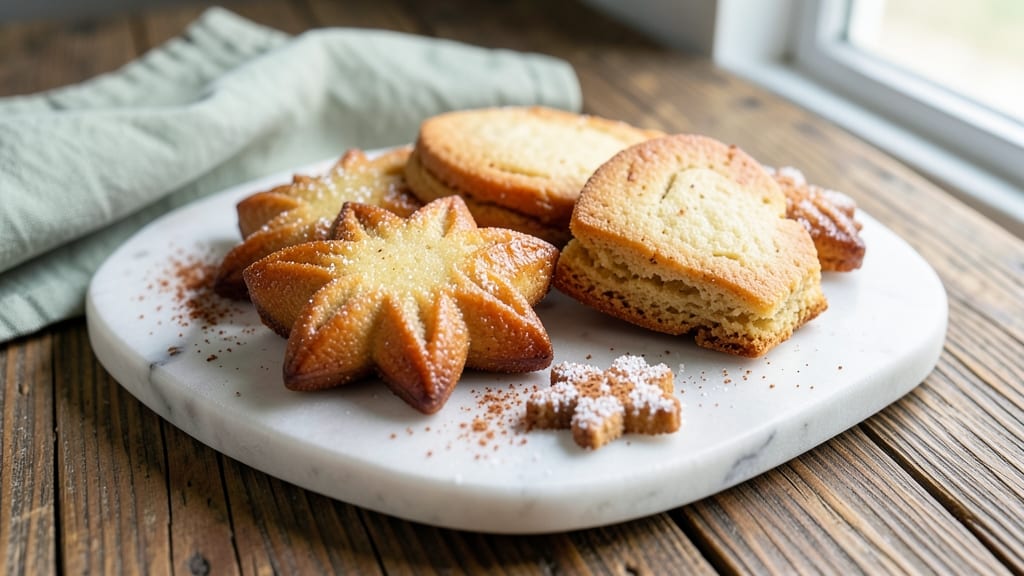
This almond sugar cookie cutout recipe delivers the perfect balance of nutty crunch and sweet caramelized edges—ideal for holiday baking or festive gatherings. The secret lies in almond flour's delicate texture and brown sugar's deep flavor, creating cookies that stay crisp at the edges while remaining tender inside.
I've perfected this recipe over years of holiday baking, ensuring every batch turns out with that signature almond aroma and satisfying crunch.
The dough comes together with just 8 simple ingredients, including a touch of vanilla and cinnamon for warmth, while the almond flour gives these cookies their signature nutty depth. Rolling the dough to ¼-inch thickness ensures even baking, and using festive cookie cutters transforms them into eye-catching treats.
The key to success is baking at 350°F for 8-10 minutes, just until the edges are golden but the centers remain soft.
Once baked, these cookies develop a beautiful caramelized crust that adds to their appeal, while the interior stays tender and packed with almond flavor. They're perfect for decorating with simple icing or sprinkles, making them ideal for gift-giving or holiday displays.
The nutty-sweet profile makes them a crowd-pleaser, whether served with coffee or as part of a festive dessert spread.
This recipe scales beautifully for parties, and leftovers store well in an airtight container for up to a week. The combination of almond flour and brown sugar creates a texture that's both sturdy for cutting shapes and delicate enough to melt in your mouth.
Ready to bake cookies that impress? Let's get started with this foolproof method.
Ingredients for almond sugar cookie cutout
Eight simple ingredients transform into festive almond sugar cookies with nutty crunch and caramelized edges.
| Ingredient | Amount | Notes |
|---|---|---|
| Almond Flour 🌰 | 2 cups | Finely ground, unsweetened |
| Light Brown Sugar 🍯 | 1 cup | Packed firmly, not leveled |
| Unsalted Butter 🧈 | 1 cup | Cold, cubed for easier mixing |
| Large Eggs 🥚 | 2 whole | Room temperature for even mixing |
| Pure Vanilla Extract 🌿 | 1 tbsp | High-quality, not imitation |
| Ground Cinnamon 🌶️ | 1 tsp | Freshly ground for best flavor |
| Fine Sea Salt 🧂 | ½ tsp | Diamond Crystal preferred |
| Granulated Sugar 🍚 | ¼ cup | For sprinkling on top |
The almond flour is the star here—Bob's Red Mill or King Arthur brands are my go-tos for consistent texture. Light brown sugar adds moisture and that signature caramelized crust, so don't substitute with white. For the butter, Plugrá or Land O'Lakes unsalted works perfectly when cold. The vanilla extract should be pure, not imitation, and McCormick or Nielsen-Massey are reliable choices. If you're baking for a crowd, double the recipe—just scale up the butter and eggs proportionally to avoid overmixing.
No almond flour? Almond butter blended with flour works in a pinch, though texture will differ slightly. Substitute brown sugar with white sugar plus 1 tsp molasses for depth. For a nut-free version, swap almond flour for all-purpose flour plus 1 tbsp cornstarch, but the flavor will change. The cinnamon can be omitted if you prefer a subtler spice profile, but I always include it—it enhances the almond flavor beautifully. For extra festivity, add 1 tsp lemon zest to the dough for brightness.
The dough keeps well in the fridge for 5 days wrapped tightly in plastic, or you can freeze it for 3 months in portions. Once baked, store cookies in an airtight container with parchment between layers to maintain crispness. For gifting, package them in cellophane bags with ribbon—they make stunning holiday presents. The granulated sugar sprinkle on top caramelizes beautifully during baking, so don't skip it. If you're making these ahead, bake them 1-2 days in advance for even better flavor development.
Why You'll Love This Recipe
- No Mixer Needed: I swear by this recipe because it’s literally three bowls and a spoon—no food processor, no weird ratios, just creamy butter and almond flour that come together like buttercream dreams. The dough’s so forgiving, I’ve shaped stars with sticky fingers and still ended up with cookies that taste like a hug.
- Buttery Vanilla Crunch: That light brown sugar caramelizes just enough to give every bite a subtle chew, while the almond flour keeps them tender with a hint of nutty depth. Honestly, the vanilla extract isn’t just flavoring—it’s the star, making these taste like a bakery’s secret stash, not a weeknight project.
- Holiday or Snack Attack: Between us, these are my go-to for Christmas trees and school bake sales. The dough chills perfectly for cutouts, and they freeze like a dream—just pull them out when you need a last-minute gift or a 3 p.m. sugar fix. (Yes, even on a Tuesday night.)
- Zero Waste, Maximum Joy: I make a double batch, freeze half, and still have cookies for weeks. The almond flour’s costlier upfront, but the butter and sugar stretch further than wheat flour dough, and the leftovers? They disappear faster than my willpower. Plus, the cutouts look fancy without the fuss.
Step-by-step instructions for almond sugar cookie cutouts
Here's how to create perfectly shaped, nutty-sweet cookies with crisp edges and tender centers.
Cream Cold Butter and Brown Sugar
In a stand mixer fitted with the paddle attachment, combine the 1 cup of cold, cubed unsalted butter and 1 cup of packed light brown sugar. Mix on medium speed for 3-4 minutes until light and fluffy. The mixture should nearly double in volume and become pale in color.
This creaming process incorporates air into the dough, which creates the signature texture of these cookies. I press down on the paddle occasionally to ensure the butter is fully incorporated and no lumps remain. The cold butter is crucial—it prevents the cookies from spreading too much in the oven.
Add Eggs and Vanilla
Add the 2 whole large eggs, one at a time, mixing on low speed for 30 seconds after each addition. Then add the 1 tablespoon of pure vanilla extract and mix for another 10 seconds. The mixture should be smooth and slightly thickened.
This step ensures the eggs are fully emulsified into the butter-sugar mixture, which helps create a tender cookie texture. I always use room-temperature eggs for even mixing and better flavor integration. Don't overmix here—just until fully combined.
Incorporate Dry Ingredients
In a separate bowl, whisk together the 2 cups of almond flour, 1 teaspoon of ground cinnamon, and 0.5 teaspoon of fine sea salt. Gradually add this mixture to the wet ingredients, mixing on low speed for 1-2 minutes until just combined. The dough should be thick and slightly sticky but hold together when pressed.
I use a silicone spatula to scrape down the sides of the bowl and ensure all the almond flour is incorporated. The dough should be cohesive enough to roll out but not so stiff that it cracks when shaping. If it's too dry, add 1 teaspoon of cold water at a time until it comes together.
Chill and Roll Out
Divide the dough into 4 equal portions (about 8 ounces each) and flatten each into a ½-inch thick disk. Wrap each disk tightly in plastic wrap and refrigerate for at least 1 hour or up to 24 hours. Chilling relaxes the gluten in the almond flour, making it easier to roll out and preventing excessive spreading.
When ready to use, roll out one disk on a lightly floured surface to about ⅛-inch thickness. Use cookie cutters to create festive shapes. Place cookies 2 inches apart on parchment-lined baking sheets. Sprinkle each with a pinch of the 0.25 cup of granulated sugar for that classic cookie cutout look.
Bake to Golden Perfection
Preheat your oven to 350°F. Bake the cookies for 10-12 minutes until the edges are golden brown and the centers are just set. They'll continue to firm up as they cool, so remove them when they look slightly underdone.
Let the cookies cool on the baking sheet for 5 minutes before transferring to a wire rack. The almond flour gives these cookies a lovely nutty flavor and a delicate crunch around the edges. Serve warm for the best texture, or store in an airtight container for up to 5 days at room temperature.
Pro Tips For Making Almond Sugar Cookie Cutout
- CHILL THE DOUGH: Almond flour dough gets sticky fast—literally within minutes. After mixing, pop the whole batch in the fridge for 20 minutes before rolling. No, you can’t rush this. The cold butter won’t melt into a greasy mess, and your cutouts will hold their shape without crumbling when you transfer them to the pan.
- WEIGH THE ALMOND FLOUR: Scooping almond flour by volume is a disaster—it packs differently every time, and your cookies end up either dense or crumbly. Use a kitchen scale for precision. Aim for 250g (about 2 cups packed), and sift it first to avoid lumps. Trust me, the texture makes a real difference.
- PRESS, DON’T ROLL: Almond flour dough is delicate—rolling it too hard turns it into a sad, greasy pancake. Instead, press the dough gently with your fingers or a well-floured rolling pin, just enough to thin it to about ¼-inch. The edges will be slightly thicker, but that’s where the flavor hides, and it keeps the centers soft.
- BAKE LOW AND SLOW: These cookies spread less than wheat-flour ones, but they still need patience. Bake at 325°F (not 350°F) for 10–12 minutes, rotating the pan halfway. The edges should be just golden while the centers stay soft—overbaking turns them dry. If unsure, pull them out early; they firm up as they cool.
Troubleshooting perfect results
Dough Too Sticky
If your dough feels too sticky to handle, it’s likely from overmixing or too much moisture. First, check your almond flour—it should be finely ground (like Bob’s Red Mill or King Arthur). If it’s clumping, sift it before mixing.
For stubborn stickiness, chill the dough an extra 30 minutes—this firms it up. If needed, add 1 tablespoon of extra almond flour to absorb moisture. Remember, the dough should be pliable but not gluey. 🌰
Cookies Spread Too Much
Over-spreading usually means the butter wasn’t cold enough or the oven ran hot. Always use cold, cubed butter (not softened) and chill the dough for at least 1 hour. Preheat your oven to 350°F and use an oven thermometer to confirm accuracy.
If your oven runs hot, reduce the temperature to 340°F for a more controlled bake. For extra insurance, place the baking sheet on the middle rack to avoid hot spots. 🔥
Cracked or Broken Edges
This happens when the dough is too dry or rolled too thin. Ensure your almond flour is fresh (old flour absorbs moisture). If the dough cracks when rolling, add 1 teaspoon of cold water at a time until it’s just cohesive.
Roll the dough to ⅛-inch thickness—thicker dough bakes more evenly and resists cracking. Also, avoid overworking the dough; mix just until combined. ✨
Pale or Underbaked Centers
Pale centers mean the cookies didn’t bake long enough or the oven wasn’t hot enough. Increase baking time by 1-2 minutes and check for golden edges (not just color). If your oven has hot spots, rotate the baking sheet halfway through.
For even baking, use parchment-lined sheets and avoid overcrowding—leave 2 inches between cookies. Let them cool 5 minutes on the sheet before transferring to a rack. 💡
Dough Sticks to Rolling Pin
Flour is your friend here! Lightly dust your rolling pin and surface with all-purpose flour before rolling. If the dough still sticks, chill it another 15 minutes to firm it up. For stubborn adhesion, use a silicone rolling pin—it reduces friction.
Avoid over-flouring, though; too much can dry out the dough and affect texture. A light dusting is all you need. 💫
Cookies Taste Bland
Bland flavor usually means weak extracts or stale spices. Use high-quality vanilla extract (like Nielsen-Massey) and freshly ground cinnamon. For extra depth, add ½ teaspoon of almond extract to the dough.
Toast the almond flour lightly in a dry pan for 2 minutes before mixing to enhance its nutty flavor. Taste the dough before baking—if it lacks richness, a pinch of sea salt can balance the sweetness. 🌶️
Nutrition facts
Frequently asked questions
Can I substitute almond flour with regular flour?
The texture will change significantly—almond flour gives these cookies their signature nutty crunch and delicate crumb. For a similar result, mix 1 cup all-purpose flour with 1 tablespoon cornstarch to mimic almond flour's properties. However, the flavor will be less rich. For a nut-free version, try 1½ cups gluten-free 1:1 baking flour plus ½ teaspoon xanthan gum.
How do I store these cookies to keep them crisp?
Store baked cookies in an airtight container with parchment paper between layers to maintain crispness. For extra crunch, place them in the freezer for 1 hour after baking before storing. They'll stay fresh for up to 5 days at room temperature or 3 months in the freezer. Reheat in a 300°F oven for 2-3 minutes to restore crispness if needed.
What's the best way to decorate these almond sugar cookies?
For a classic look, brush warm cookies with simple vanilla glaze (powdered sugar + milk) while still soft. For festive appeal, pipe royal icing in colors and add sprinkles. Try edible gold leaf or crushed pistachios for a luxurious touch. Let decorations set for 1 hour before stacking.
Why did my cookies turn out too soft?
Overbaking is the most common cause—these cookies should have golden edges but soft centers. Check your oven temperature with a thermometer (many run hot). Bake at 350°F for 8-10 minutes max. If your kitchen is humid, chill the dough longer to prevent spreading. For extra structure, add 1 tablespoon cornstarch to the dry ingredients.
Can I make these cookies ahead for holiday gifting?
Bake them 2-3 days ahead and store in airtight containers. The flavors deepen over time. For gifting, package in cellophane bags with ribbon or decorative boxes. Add a personalized tag with the recipe card. They freeze beautifully too—just thaw at room temperature before serving.