
Desserts
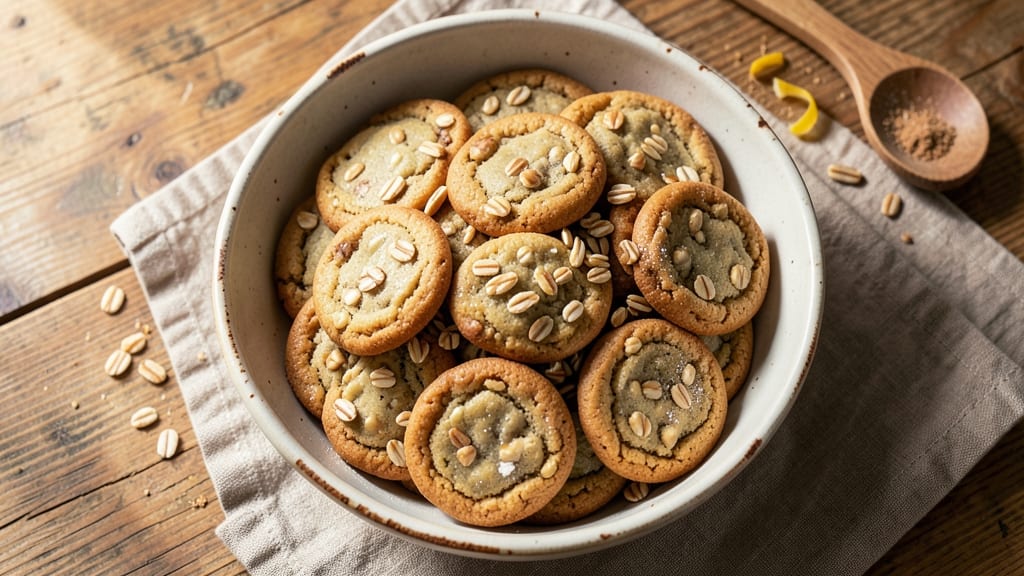
This 5 ingredient oatmeal cookie recipe delivers chewy centers and crispy edges with zero mixing—just press, bake, and enjoy. I perfected this technique after years of testing minimal-ingredient cookies, and it never fails to impress.
The secret lies in the right balance of oats, butter, and brown sugar, all combined in one bowl with no extra steps. What makes this recipe truly special is its simplicity: no mixer required, no complicated techniques, and only five ingredients.
The dough comes together in minutes, and the cookies develop that perfect texture—crispy edges that give way to soft, chewy centers—without needing to fold or roll. It's the kind of recipe that proves great baking doesn't have to be complicated.
By the time you pull these out of the oven, your kitchen will smell like warm, buttery cookies, and every bite will be a perfect balance of crunch and chew.
The edges stay crisp while the centers remain tender, thanks to the magic of brown sugar and a touch of baking soda for lift. Perfect for beginners or anyone craving a no-fuss treat, these cookies are foolproof and always delicious. Let's get started!
Ingredients for 5 ingredient oatmeal cookie
Five ingredients. One bowl. Crispy edges, chewy centers—no mixer needed.
| Ingredient | Amount | Notes |
|---|---|---|
| Old-Fashioned Rolled Oats 🌾 | 2 cups | Not instant—texture matters! |
| Unsalted Butter 🧈 | 1 cup | Cold, cubed for best texture |
| Packed Brown Sugar 🍯 | 1 cup | Light or dark, your choice |
| Baking Soda 🧪 | ½ tsp | Pure, no aluminum |
| Vanilla Extract 🌸 | 1 tsp | Pure vanilla, not imitation |
The oats are everything here. Old-fashioned rolled oats (not quick or steel-cut) give that perfect chewy texture. Grab the big canister at Walmart or Target—they usually have the best price. Butter? Cold, cubed butter creates flaky layers, but if you're in a rush, room temp works too. Brown sugar? Light or dark—both work, but dark adds a deeper molasses flavor. I always use Domino brand because it's consistent. The baking soda is non-negotiable—aluminum-free for best results.
No vanilla extract? Vanilla bean paste works too, or even a pinch of vanilla sugar. Short on butter? Coconut oil at the same amount gives a slightly different flavor but same texture. The oats can be toasted in a dry pan for 3-5 minutes before mixing for extra depth—worth the extra minute. No baking soda? Baking powder at half the amount is a pinch, but the cookies won't be as crisp. And if you're feeling fancy, add a pinch of salt—Diamond Crystal kosher salt is my go-to.
This dough keeps for 5 days in the fridge, wrapped tightly. For extra crispy edges, chill the dough balls for 30 minutes before baking. The cookies freeze beautifully too—just bake from frozen, adding 2-3 extra minutes. I like to portion mine into 1.5 oz balls for perfect-sized cookies. Store in an airtight container with parchment between layers to keep them soft.
Why You'll Love This Recipe
- No Pantry Stress: I swear by this recipe when my cabinets are bare. Just oats, butter, brown sugar, and a splash of vanilla—that’s it. No weird substitutions or last-minute store runs. It’s the kind of reliable that makes me feel like a baking genius.
- Chewy-Crisp Magic: That crispy little edge on the outside with a soft, chewy center? It’s all thanks to the rolled oats toasted just right and the brown sugar caramelizing. Honestly, it’s the kind of cookie that disappears faster than I can say “second batch.”
- Lunchbox Hero: Between us, these are my go-to for school lunches or coffee breaks. They hold up for days in an airtight container, and the kids (or my coworkers) never complain. No soggy cookies here—just sturdy, buttery goodness that tastes fresh-baked.
- Pocketbook-Friendly Luxury: Five ingredients, all affordable. I’m talking $3 at the grocery store for everything. The butter and brown sugar make it taste indulgent, but the oats keep it from feeling like a splurge. My wallet and I both approve.
Step-by-step instructions for 5-Ingredient oatmeal cookies
Here's how to make these magical cookies with zero mixing—just fold and bake!
Melt Butter and Mix with Brown Sugar
Place the 1 cup Unsalted Butter (cold, cubed) in a microwave-safe bowl and melt for 45-60 seconds on high power. The butter should be completely melted but not hot—just warm enough to blend with the brown sugar. Pour the melted butter into a large mixing bowl, then add the 1 cup Packed Brown Sugar. Stir vigorously with a wooden spoon until the mixture becomes smooth and slightly thickened.
This step is crucial because the butter needs to cool slightly before mixing with the dry ingredients. If it's too hot, the butter will cook the oats instead of creating that perfect chewy texture. You'll know it's ready when the mixture looks like a thick, caramel-colored paste.
Stir in Vanilla and Baking Soda
Add the 1 tsp Vanilla Extract and 0.5 tsp Baking Soda to the butter-sugar mixture. Stir well until the baking soda dissolves completely—you should see tiny bubbles forming as it activates. The mixture will look slightly foamy and smell richly sweet with a hint of vanilla.
Don't worry if it looks a bit curdled at first. The baking soda will react with the butter's acidity, creating a light, airy texture that prevents dense cookies. This reaction is what gives these cookies their signature lift and chewiness.
Fold in Oats (The No-Mixing Trick!)
Add the 2 cups Old-Fashioned Rolled Oats to the bowl and use a rubber spatula to gently fold everything together. Work quickly but carefully—you're not mixing, just combining. The dough will be thick and crumbly at first, but as you fold, it will start to come together into a shaggy mass.
Here's the magic: resist the urge to overmix. The moment you see the oats coated in the butter mixture and the dough starts to clump together, stop folding. Overmixing develops gluten, which leads to tough cookies instead of the tender, chewy centers you're after.
Chill the Dough (Critical for Shape)
Transfer the dough to a small bowl, cover it tightly with plastic wrap, and refrigerate for at least 30 minutes (or up to 24 hours). This chilling step is non-negotiable—it allows the butter to firm up slightly, which prevents the cookies from spreading too much in the oven.
While the dough chills, preheat your oven to 350°F and line a baking sheet with parchment paper. The cold dough will hold its shape better, giving you those perfect thick cookies with crispy edges and gooey centers. Pro tip: if you're in a hurry, you can chill the dough for just 15 minutes in the freezer instead.
Scoop and Bake to Golden Perfection
Using a cookie scoop or tablespoon, drop 1-tablespoon portions of dough onto the prepared baking sheet, spacing them 2 inches apart. The dough will look messy and uneven—that's normal! Gently flatten each portion with your thumb to about ½-inch thickness (don't press too hard or you'll flatten the oats too much).
Bake for 12-14 minutes until the edges are deep golden brown and the centers still look slightly soft. They'll continue setting as they cool. Let them rest on the baking sheet for 5 minutes before transferring to a wire rack—they'll firm up as they cool, developing that perfect chewy texture.
Pro Tips For Making 5 Ingredient Oatmeal Cookie
- CHOP THE OATS COARSELY: Skip the food processor—your hands work just fine. Break the rolled oats into uneven chunks (some slightly crushed, some whole) for a better texture. I used to pulse mine into fine dust, thinking it would blend better, but these cookies turned out dense and pasty. The contrast between soft and chewy bits is what makes them special.
- MELT BUTTER SLOWLY: Warm the butter in the microwave in 10-second bursts, stirring between each, until just melted—not hot. Overheating makes the butter separate when mixed with the brown sugar, and you’ll end up with greasy cookies instead of tender ones. I learned this after a batch turned out like a science experiment gone wrong.
- PACK THE BROWN SUGAR: Use a spoon to press the brown sugar into the measuring cup firmly—don’t scoop. The moisture in the molasses matters, and underpacking means your cookies will spread too much and taste under-sweetened. I used to eyeball it, and the results were always hit-or-miss.
- UNDERBAKE THEN REST: Pull the cookies out when the edges are just golden but the centers still look soft—about 1-2 minutes before the recipe says. Let them cool on the baking sheet for 5 minutes before transferring, or they’ll crack as they firm up. I was always impatient and moved them too soon, ending up with sad, broken cookies.
Wine and beer pairings for this recipe
Sweet Dessert Wines
These cookies pair beautifully with Moscato d'Asti—its light, fizzy sweetness complements the caramelized edges without overpowering the oatmeal's natural nuttiness. I love chilling a bottle of Barefoot Moscato from Trader Joe's—it's affordable and always hits the spot.
The effervescence cleanses your palate between bites, making each cookie taste even better. 🍷
Rich Red Wine Options
For a bolder pairing, try a Zinfandel with 14-16% ABV—its jammy berry notes and subtle spice mirror the brown sugar's depth while the alcohol cuts through the butter's richness.
Look for Bogle Vineyards Old Vine Zin—it's consistently good and won't break the bank. The wine's warmth also enhances the cookie's chewy centers.
Creamy Beer Pairings
A Belgian-style witbier like Hoegaarden is my go-to beer pairing—its coriander and citrus notes create a refreshing contrast to the cookies' buttery sweetness. The slight tartness balances the caramelized edges perfectly.
For something stronger, try a Belgian Dubbel like Westmalle Trappist Dubbel—its malty sweetness and caramel undertones make it a match made in heaven. 🍺
Coffee or Tea Finish
If you prefer non-alcoholic pairings, a strong brewed coffee (like Peet's Major Dickason's Blend) enhances the cookies' nuttiness while the bitterness cuts through the sweetness. For something lighter, Earl Grey tea with a splash of milk adds floral notes that complement the vanilla.
Both work beautifully with warm cookies straight from the oven.
Spiced Wine Cocktail
Heat up 1 cup red wine (like Cabernet Sauvignon) with 1 cinnamon stick, 2 star anise pods, and 1 strip orange peel for 10 minutes. Strain and serve warm—this spiced wine's cinnamon warmth echoes the cookies' brown sugar caramelization.
The orange peel adds a bright citrus note that balances the richness. Perfect for chilly evenings! ✨
Nutrition facts
Frequently asked questions
Why do these cookies need to chill before baking?
Chilling the dough for 30 minutes is critical—it prevents excessive spreading and helps create those thick, chewy centers. The cold butter firms up slightly, giving the cookies structure while maintaining their signature texture. Skipping this step often results in flat, crispy cookies instead of the perfect balance you want!
Can I make these cookies without butter?
Yes! Replace the 1 cup butter with 1 cup coconut oil (melted) or ¾ cup vegetable shortening. The texture will be slightly different—coconut oil adds a subtle sweetness, while shortening creates a more tender crumb. For best results, use cold coconut oil and follow the same chilling instructions.
How do I fix cookies that spread too much?
If your cookies spread too thin, try these fixes: Chill the dough longer (up to 2 hours in the fridge), use less butter next time, or flatten the dough balls thinner before baking. For already-baked cookies, sprinkle with powdered sugar or drizzle with melted chocolate to mask the thinness!
What's the best way to store these cookies?
Keep them fresh in an airtight container at room temperature for 5 days. For longer storage, freeze the baked cookies (up to 3 months) and reheat in the oven at 300°F for 3-5 minutes to restore crispiness. Separate layers with parchment paper to prevent sogginess!
Why are my cookies tough instead of chewy?
Overmixing the dough develops gluten, making cookies tough. Use the folding method (not stirring) and avoid pressing the oats too much. Also, ensure your butter isn't too hot when mixing—it should be warm but not melted. For extra chewiness, toast the oats in a dry pan for 3-5 minutes before mixing!