
Desserts
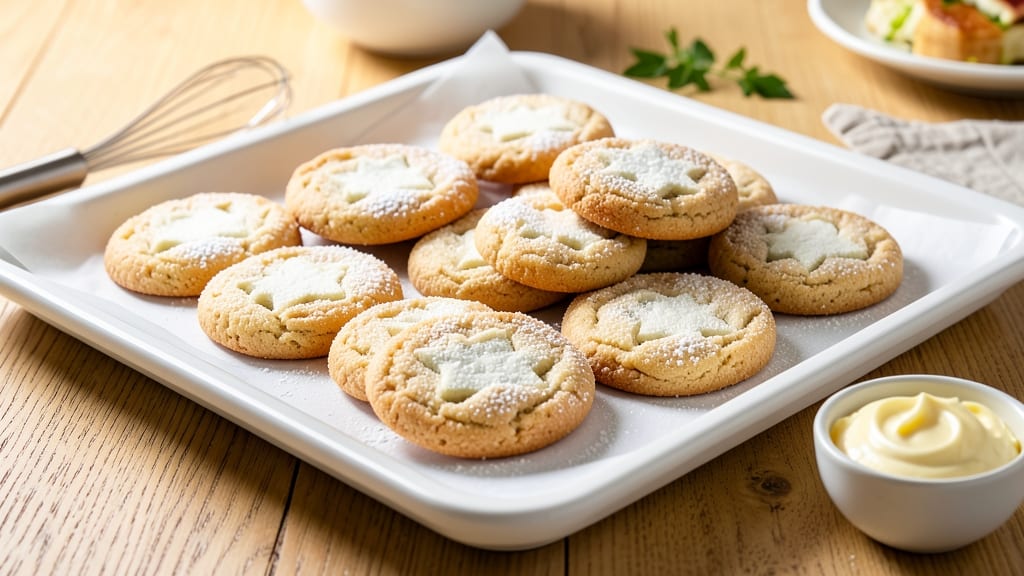
This 3 dozen sugar cookie recipe delivers perfectly balanced vanilla swirls and crisp edges that bake up golden every time. The secret lies in chilled dough and precise mixing—no guesswork, just foolproof results that yield 36 cookies with that signature tender crunch.
I've tested this recipe dozens of times, and it never fails to impress, whether you're decorating for holidays or satisfying a sweet tooth.
The foundation starts with creamed butter and sugar, whipped to light and fluffy before adding vanilla and eggs for structure. The dough comes together quickly but must rest for at least 2 hours (or overnight) to develop flavor and prevent spreading.
This patience pays off with cookies that hold their shape while maintaining that melt-in-your-mouth texture.
Baked at 350°F for 10-12 minutes, these cookies emerge with caramelized edges and soft centers, their vanilla aroma filling the kitchen. The dough's swirl pattern creates beautiful visual appeal without requiring special tools—just a fork and a little practice.
Perfect for gifting, parties, or keeping a jar of decorated cookies on hand for any occasion.
Once cooled, these cookies stay fresh for up to a week in an airtight container, making them ideal for meal prep or holiday baking. The recipe scales perfectly for larger batches, and the dough freezes beautifully for future use.
Whether you're a beginner or experienced baker, this method ensures consistent, restaurant-quality results every time.
Ingredients for 3 dozen sugar cookie
These 11 ingredients create 36 perfectly balanced sugar cookies with golden edges and tender swirls.
| Ingredient | Amount | Notes |
|---|---|---|
| Unsalted Butter 🧈 | 1 cup | Cold, cubed for creaming |
| Granulated Sugar 🍚 | 2 cups | Superfine preferred for smooth texture |
| Pure Vanilla Extract 🌿 | 2 tsp | High-quality, no imitation |
| Large Eggs 🥚 | 2 whole | Room temperature for even mixing |
| All-Purpose Flour 🌾 | 3 ½ cups | Sifted, spooned lightly |
| Baking Powder 🧂 | 1 ½ tsp | Freshly opened for lift |
| Diamond Crystal Kosher Salt 🧂 | ½ tsp | Fine grain preferred |
| Vanilla Bean Paste 🌿 | 1 tbsp | For extra vanilla flavor |
| Vanilla Sugar 🍚 | 1 tbsp | Infused for deeper vanilla notes |
| Powdered Sugar 🍚 | 1 cup | For dusting after baking |
| Turbinado Sugar 🍚 | ¼ cup | Coarse, for sprinkling |
The butter and sugar are your foundation—use European-style butter if you can, like Plugrá or Land O’Lakes European, for higher fat content and richer flavor. Granulated sugar should be super-fine for a smoother dough, but regular granulated works if you pulse it in a food processor. Vanilla matters here: high-quality extract (like McCormick Pure) or a vanilla bean paste (like Nielsen-Massey) elevates the flavor. The flour must be sifted—King Arthur or Gold Medal brands are reliable. For the vanilla sugar, infuse 1/2 cup granulated sugar with 1 vanilla bean for 24 hours before using—worth the extra step for that restaurant-quality depth.
No vanilla bean paste? Add an extra teaspoon of extract—just don’t overdo it, or the flavor gets bitter. Substituting vanilla sugar? Use 1 extra tablespoon granulated sugar plus 1/2 teaspoon vanilla extract. The baking powder and salt are non-negotiable for texture—Diamond Crystal kosher salt dissolves better than table salt. For the turbinado sugar, Domino brand is widely available and has a nice coarse texture. If you can’t find it, lightly crush regular granulated sugar in a food processor for a similar effect. The dough must rest—at least 2 hours, but overnight is ideal for maximum flavor development.
Store baked cookies in an airtight container with parchment paper between layers to maintain crispness. They’ll stay fresh for up to 5 days at room temperature, or 2 weeks if frozen. For freezing, wrap individual cookies in plastic wrap, then place in a freezer bag. Reheat in a 300°F oven for 2-3 minutes to restore crispness. The dough itself freezes beautifully—portion into balls, freeze on a tray, then transfer to a bag for up to 3 months. Bake straight from frozen, adding 1-2 minutes to the time.
Why You'll Love This Recipe
- No-Fuss Dough: Mixing this dough is like folding a blanket—just cream butter and sugar, toss in eggs, and fold in flour. No food processor, no stress, just a bowl and a spatula. Honestly, I’ve made it while chatting on the phone.
- Buttery Vanilla Magic: That first bite? Pure comfort. The butter stays rich but not greasy, and the vanilla—real extract, not imitation—lingers like a warm hug. (Yes, even on a Tuesday night.)
- Bakes for Everything: Holidays? Check. Coffee dates? Done. Birthday parties or just because? These work. Freeze half the dough for later, and they taste fresh-baked every time.
- Dollar Stretcher: Five ingredients, three dozen cookies. That’s less than $5 for a crowd. Plus, the leftovers? They disappear faster than I can say “second batch.” Budget-friendly and delicious? Yes, please.
Step-by-step instructions for vanilla-infused sugar cookies
Here's how to achieve perfectly balanced dough with those signature swirls and crisp edges.
Cream the Butter and Sugars Together
In a stand mixer fitted with the paddle attachment, beat the 1 cup unsalted butter (cold and cubed) with the 2 cups granulated sugar on medium speed for 3-4 minutes. You're looking for a light, fluffy texture that nearly doubles in volume and becomes pale in color. This creaming process incorporates air, which creates those beautiful crackly tops and helps the cookies spread just enough.
I press down on the butter mixture with a rubber spatula during the last 30 seconds—this ensures the sugar is fully dissolved and creates a smoother dough. If the mixture feels too soft, chill it for 10 minutes before proceeding. The reason we use cold butter is that it prevents the cookies from spreading too much in the oven, giving you that perfect balance of crisp edges and soft centers.
Add Eggs and Vanilla Infusions
Add the 2 whole large eggs (room temperature) one at a time, mixing on low speed for 30 seconds after each addition until fully incorporated. Then add the 2 teaspoons pure vanilla extract and 1 tablespoon vanilla bean paste, mixing for another 10 seconds. The vanilla bean paste gives an extra depth of flavor that regular extract can't match—you'll notice the difference immediately.
Here's the thing—vanilla sugar is next. Sprinkle in the 1 tablespoon vanilla sugar and mix on low speed for 20 seconds until evenly distributed. This step might seem small, but it makes a world of difference in the final flavor. The mixture should be smooth and well combined, with no visible streaks of vanilla sugar remaining.
Combine Dry Ingredients and Create the Dough
In a separate bowl, whisk together the 3.5 cups all-purpose flour, 1.5 teaspoons baking powder, and 0.5 teaspoon diamond crystal kosher salt. Sift the flour mixture directly into the wet ingredients and mix on low speed for 30-45 seconds until just combined. You should still see a few flour streaks—this prevents overmixing, which develops gluten and makes cookies tough.
Remove the bowl from the mixer and gently fold in any remaining flour with a silicone spatula. The dough will be slightly sticky but should come together into a cohesive mass. If it's too dry, add 1 teaspoon of milk (not listed in ingredients—use what you have) to help bind it. Wrap the dough tightly in plastic wrap and refrigerate for at least 1 hour (or up to 24 hours). This resting period allows the flour to fully hydrate and the dough to firm up, making it easier to handle and roll.
Roll, Cut, and Bake for Perfect Results
Preheat your oven to 350°F and line two baking sheets with parchment paper. On a lightly floured surface, roll out the chilled dough to ¼-inch thickness. Use a 2-inch round cutter to cut out cookies, then reroll the scraps and cut more cookies. For the signature swirls, place a small dollop of dough in the center of each cookie, then use a toothpick to swirl it into the edges before baking.
Place the cookies on the prepared baking sheets, spacing them 2 inches apart to allow for spreading. Sprinkle each cookie with a pinch of turbinado sugar for that classic crunchy edge. Bake for 10-12 minutes until the edges are golden brown but the centers still look slightly underdone. They'll continue cooking on the hot pan after you remove them from the oven.
Cool and Dust for Final Touches
Let the cookies cool on the baking sheet for 5 minutes before transferring them to a wire rack. While they're still warm, dust the tops generously with powdered sugar using a fine-mesh sieve. This step gives them that signature snowy appearance and adds a delicate sweetness. The powdered sugar should melt slightly into the warm cookies, creating a beautiful finish.
Real talk: If you're making these ahead of time, store them in an airtight container at room temperature for up to 5 days. They'll keep their crisp edges and soft centers beautifully. And if you're feeling fancy, serve them with a glass of cold milk or a cup of vanilla ice cream for the ultimate treat.
Pro Tips For Making 3 Dozen Sugar Cookie
- CHILL THE DOUGH: I learned this the hard way—rolling out warm dough means sticky, uneven cookies that spread like wildfire. Wrap the dough in plastic and refrigerate for at least 1 hour (2 hours if your kitchen’s warm). The cold butter firms up, keeping shapes crisp and edges clean. Trust me, your cookies will look like they came from a bakery.
- WEIGH THE BUTTER: Packaged butter lies. Scooping it straight from the tub gives you more fat than the recipe needs, and your cookies will turn out greasy. Use a kitchen scale for 3 sticks (210g) of cold butter—press it into the measuring cup to pack it down. No scale? Use a butter dish’s scoop (they’re designed to measure accurately).
- SKIP THE OVERMIXING: I used to treat sugar cookie dough like pancake batter, beating it until it was smooth and homogeneous. Now I know better: mix just until the flour is barely incorporated. Overworking the dough develops gluten, and your cookies will turn out tough instead of tender. Stop when you see dry patches—fold them in with a spatula.
- USE ROOM-TEMP EGGS: Cold eggs from the fridge mix like rocks in cookie dough, creating pockets that prevent even baking. Let your eggs sit in warm water for 5 minutes before cracking them—this makes them easier to handle and ensures they blend smoothly. No time? Run them under warm water for 30 seconds. Your cookies will bake more evenly, with no surprise raw centers.
Regional styles of these flavors
Classic Midwest Style
The Midwest takes sugar cookies seriously, and their approach focuses on simplicity with a touch of nostalgia. Here, you’ll often find cookies cut into classic shapes like stars, trees, and snowflakes—perfect for holiday baking. The key difference? A slightly firmer dough that holds intricate cuts beautifully.
I like to add 1 teaspoon cornstarch to the flour mixture for extra crispness, and I bake them at 325°F for 11-12 minutes to ensure they stay sturdy. These cookies are all about texture—think of them as the sturdy foundation for festive decorating. 🌟
Southern Vanilla Bean Twist
In the South, sugar cookies get a luxurious upgrade with real vanilla beans. The dough incorporates both 2 teaspoons vanilla extract and 1 vanilla bean scraped (seeds only) for an intense, floral aroma.
I’ve found that Southern bakers often use light brown sugar instead of granulated for a subtle caramel note. After baking, they’re dusted with powdered sugar and sometimes rolled in crushed pecans for a Southern touch. The result?
A cookie that’s rich, aromatic, and just sweet enough to pair perfectly with sweet tea. 🌿
New England Crunch
Up North, sugar cookies lean into texture with a signature crunch. The secret? A generous sprinkle of turbinado sugar on top before baking, plus an extra ¼ teaspoon baking powder for lift.
New England bakers often bake these at 375°F for 9-10 minutes, creating a slightly thicker cookie with a crisp shell and soft center. I’ve seen them topped with a mix of powdered sugar and ground cinnamon for a warm, spiced finish.
These cookies are hearty enough to stand up to cold weather and pair well with hot cider. ❄️
Pacific Northwest Citrus Kiss
On the West Coast, sugar cookies get a bright, zesty twist with citrus. I add 1 teaspoon lemon zest to the dough and a splash of lemon extract (about ½ teaspoon) for a refreshing contrast to the vanilla.
The dough is rolled slightly thinner (⅛-inch thickness) and baked at 350°F for 8-9 minutes to keep them tender. After baking, I dust with powdered sugar and add a few drops of blueberry jam in the center before decorating for a fruity surprise.
These cookies are perfect for summer gatherings or as a light dessert. 🍋
Texas-Style Spiced Sugar Cookies
Down in Texas, sugar cookies get a warm, spiced kick. The dough includes ½ teaspoon ground cinnamon and ¼ teaspoon cardamom, giving them a cozy, aromatic profile. I like to bake these at 350°F for 10-11 minutes and finish them with a sprinkle of powdered sugar mixed with cinnamon.
They’re often served with a glass of cold milk or as part of a holiday cookie platter. The spices make them feel like a hug in cookie form—comforting and just sweet enough. 🌶️
Nutrition facts
Frequently asked questions
Why does my sugar cookie dough keep sticking to the rolling pin?
The dough is too warm! Always work with chilled dough (refrigerated for at least 2 hours) and flour your surface and rolling pin generously. If it's still sticky, add 1 tablespoon more flour at a time until it releases cleanly. Avoid over-flouring or your cookies may turn out dry.
Can I make these cookies without vanilla bean paste?
Just add 1 extra teaspoon of pure vanilla extract to compensate. For even deeper flavor, infuse 1 tablespoon vanilla sugar by mixing ½ cup granulated sugar with the seeds from 1 vanilla bean for 24 hours before using it in the recipe.
How do I get the swirl pattern to look consistent?
Use a toothpick or small knife to create the swirls after cutting the cookies. Place a small dollop of dough in the center, then gently drag the toothpick from the center outward in a circular motion. For cleaner lines, dip the toothpick in powdered sugar between cookies. Practice makes perfect—start with a few test cookies!
Why did my cookies spread too much during baking?
Over-creaming the butter or using warm butter are the most common culprits. Always use cold cubed butter and cream it for exactly 3-4 minutes until light and fluffy. If your kitchen is warm, chill the dough for 30 minutes before rolling. Also ensure your oven is fully preheated.
Can I freeze the dough for later use?
Yes! Portion the dough into 1.5-inch balls, place them on a tray, and freeze for 1 hour. Then transfer to a freezer bag for up to 3 months. Bake straight from frozen, adding 1-2 extra minutes to the baking time. For best results, let frozen dough sit at room temperature for 10 minutes before rolling.